The future of augmented reality is mobile-first: over a billion people already use AR through a phone camera, and the engines behind those experiences are face tracking SDKs like Banuba Face AR SDK. Banuba Face AR SDK is a real-time, on-device face tracking and AR effects SDK that runs at 30 FPS on mid-range mobile hardware with a -80° to +80° head-angle tracking range. Smart glasses are the fastest growing part of the category, but the phone camera is still where the volume is, which is why face tracking built for mobile and the browser is what ships today.
TL;DR:
- Statista counts an estimated 1.07 billion mobile AR users worldwide in 2025, rising to a projected 1.19 billion by 2028.
- Smart glasses grew 167% year over year in Q1 2026 to about 2.25 million units in the quarter (IDC), led by display-less AI glasses rather than full AR displays.
- IDC forecasts about 13.6 million smart glasses units for full-year 2026 and 27.3 million by 2030, a CAGR of 18.9%.
- Meta held 69.2% of the smart glasses market in Q1 2026 (IDC).
- Coresight Research projects US live commerce at around $68 billion in 2026, more than 5% of total US ecommerce sales, up from $32 billion in 2023. But actual 2025 US livestream ecommerce sales came in far lower, at $14.64 billion, up nearly 50% year over year.
- Meta shut down the Meta Spark platform on 14 January 2025, so third-party AR effects on Meta apps disappeared, and brands moved toward effects they own.
- Microsoft's US Army IVAS contract, valued at up to $22 billion, was novated to Anduril in April 2025, with Microsoft staying on as cloud provider. But by mid-2026, the Army determined the resulting headsets were unaffordable to produce at scale, and the program has since reopened as a multi-vendor prototyping effort, Soldier Borne Mission Command, with Anduril, Rivet, Elbit America, and L3Harris competing.
- Banuba Face AR SDK covers 97% of Apple smartphones and 80% of Android smartphones at min 30 FPS, with all processing on-device.
Augmented Reality in 2026: Five Numbers That Set the Baseline
Before the trends, five numbers that frame the future of augmented reality as it stands right now.
- There were an estimated 1.03 billion mobile AR users worldwide in 2024 and an estimated 1.07 billion in 2025, with a projected 1.19 billion by 2028 (Statista).
- The smart glasses category grew 167% year over year in Q1 2026, reaching about 2.25 million units in the quarter (IDC).
- IDC forecasts about 13.6 million smart glasses units for full-year 2026, growing to 27.3 million by 2030, a CAGR of 18.9%.
- Meta held 69.2% of the smart glasses market in Q1 2026 (IDC), and the growth is led by display-less AI glasses rather than full AR displays.
- Coresight Research projects the US live commerce market at around $68 billion in 2026, more than 5% of total US ecommerce sales, up from $32 billion in 2023. Though actual 2025 sales landed closer to $14.64 billion, up nearly 50% year over year, suggesting the US market is scaling more slowly than the original forecast implied.

Top 7 AR Trends to Watch in 2026
Now let's take a look at the augmented reality future trends making the most impact right now.
AR Reaches Users Through Devices They Already Own
The future of AR is ubiquitousness, and it arrives on hardware people already carry. The vast majority of the billion-plus mobile AR users Statista counts reach AR through a phone camera, because AR-capable devices and the optimization of major augmented reality platforms now overlap almost completely. Banuba Face AR SDK covers 97% of Apple smartphones and 80% of Android smartphones, running on iOS 13+ and Android 8.0+ devices at min 30 FPS.
Web AR is accessible through a browser, which means it can run on almost any connected device with no install step at all.
Industrial and government AR remains a real but separate market. Microsoft won the US Army's 10-year Integrated Visual Augmentation System contract, valued at up to $22 billion, in 2021, built on HoloLens. In February 2025, Microsoft and Anduril announced that Anduril would take over production and future hardware and software development, and the Army signed the contract novation in April 2025. But by mid-2026, the Army determined the resulting IVAS headsets were unaffordable to produce at scale, and the program has since shifted to prototyping under a new name, Soldier Borne Mission Command, with Anduril, Rivet, Elbit America, and L3Harris now competing rather than Anduril alone. Microsoft remains the cloud provider, with Azure the preferred cloud platform for IVAS workloads. BMW likewise uses custom smart glasses to speed up vehicle maintenance.
/cdn.vox-cdn.com/uploads/chorus_image/image/69056502/2nd_crop_hi_res_CS3_1__1_.0.png) Professional headsets are the future of AR. Photo: US Army
Professional headsets are the future of AR. Photo: US Army
On the consumer side, IDC forecasts about 13.6 million smart glasses units for full-year 2026 and 27.3 million by 2030, real growth that still sits far below the mobile installed base.
AI Smart Glasses Become the Second AR Screen
The hardware story of 2026 is not a full AR display. It is the display-less AI glasses category, led by Meta Ray-Ban, that is pulling the whole segment upward, with Meta holding 69.2% of the smart glasses market in Q1 2026 (IDC).
Two launches shape the rest of the year. Snap revealed the first consumer Specs AR glasses at AWE 2026, launching for consumers later in 2026 and powered by Qualcomm Snapdragon XR silicon under a multi-year agreement. Google and Samsung's first Android XR glasses are due in Fall 2026.
For product teams, the read is straightforward. Glasses are becoming a genuine second AR screen, but the phone camera is still where the volume is: roughly a billion mobile AR users against a forecast 13.6 million smart glasses units in 2026. Face tracking AR built for mobile and the web is what ships today, which is the footprint Banuba Face AR SDK targets.
AR Live Shopping Scales in the West
Live shopping is a reinvention of an old concept: TV shopping (HSN, QVC, etc.) done over the internet, with products highlighted when you want them and bought with a click. It combines naturally with AR try-on.
Europe and the USA are still catching up with Asia, although the trend is growing steadily. Coresight Research projects the US live commerce market at around $68 billion in 2026, more than 5% of total US ecommerce sales, up from $32 billion in 2023. Though actual 2025 sales landed closer to $14.64 billion, up nearly 50% year over year, suggesting the US market is scaling more slowly than the original forecast implied.
Three things make the format work: it pairs the convenience of online shopping with the personal touch of a store visit, it converts social media subscribers without making them leave the platform, and it takes influencer marketing as a native ingredient rather than a bolt-on. AR supplies the framework underneath, from tagging items to virtual try-on and AR face filters for the presenters.
Short-Video Apps Keep Setting the AR Baseline
Short video apps still set user expectations for what a camera should do, and they keep pushing AR forward. TikTok's Effect House opened AR effect creation to everyone, making masks and stickers more accessible to non-specialists.
The bigger structural change came from the other direction. Meta shut down the Meta Spark platform of third-party tools and content on 14 January 2025. Effects built by third parties, including brands and AR creators, stopped being available from that date, and only Meta-owned effects remained, with Meta saying it was shifting resources to new form factors like glasses. For brands, that removed a free distribution channel overnight and pushed effect development toward SDK-owned experiences inside apps they control.
The effect is global. Chingari, an Indian short video platform, expanded its portfolio of filters with a local feel and added AR live shopping features.

AR Moves Into Physical Retail
Augmented reality future trends blend physical and digital. While people appreciate the convenience of online shopping, they also enjoy the experience and human contact of brick-and-mortar stores. New AR tech reaches retail in many forms, from virtual try-on apps directing people to physical shops, to smart mirrors and AR photo booths that create viral social media photos.
The commercial case is why retailers keep funding it. eMarketer reports that retailers deploying virtual try-on see conversion-rate increases and lower return rates, with commonly cited outcomes being conversion lifts in the low double digits and return reductions in the 25% to 40% range depending on category. That is why most retailers start with try-on rather than anything more exotic.
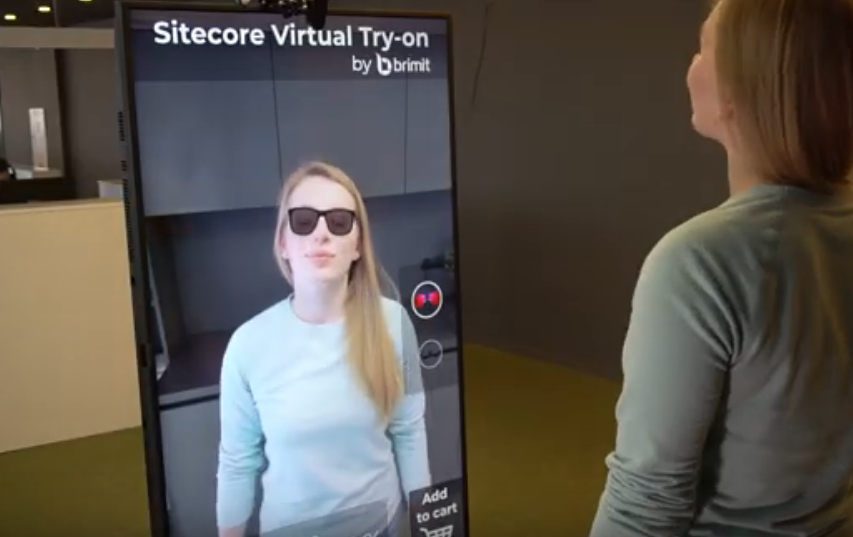 Virtual try-on mirror
There are other implementations, though. BMW allows modifying cars in AR, changing the color of the interior, lights, and so on, plus a virtual test-drive option for select vehicles. And Target uses augmented reality for in-store navigation: its app helps people find goods by tracking beacons, and a typical Target location has about 1000 of them.
AR Becomes Standard Tooling in Manufacturing
The future of AR includes more than consumer-facing apps. A less-known but no less important application is in factories, where companies use it in four typical ways:
- Training new employees. AR shows step-by-step instructions for operations in live environments, which makes workers more confident and speeds up skill acquisition.
- Locating items. Image recognition and artificial intelligence can find a certain device much faster than a human could.
- Remote collaboration. Transmitting AR information live from one place to another lets experts assist people without visiting their location.
- Process design. Engineers can plan out manufacturing cells and place robots and other machinery in a more convenient, visual way.
Industrial smart glasses are the delivery mechanism, and the segment is consolidating around defence and enterprise specialists rather than general-purpose computing platforms, which is a shift underscored by the US Army's IVAS programme moving from a Microsoft-only contract to a multi-vendor prototyping competition (Anduril, Rivet, Elbit America, L3Harris) under the Soldier Borne Mission Command name.
Major manufacturers already use augmented reality in their factories, including Dassault, Siemens and Rolls Royce.
Web AR Removes the Install Step
Augmented reality can be implemented within browsers. This approach allows for maximum accessibility at a relatively low cost, at the price of lower performance due to inherent technical limitations. It suits many cases, including AR marketing, indoor and outdoor navigation, video calls, and eLearning. If you are weighing where an AR campaign should live, here is a channel-by-channel look at where AR campaigns actually reach people.
Web AR fits alongside every other trend on this list, and its biggest advantage is that there is nothing to install, so the distance between an ad click and a working AR experience is one page load.
It also keeps getting easier to implement. By combining the SDKs from Banuba (for AR and voice effects) and its partner Agora (for video conferencing), you can build a web-based video calling service in a week.
How the Future of Augmented Reality Disrupts Industries
From a gimmick, AR has become something millions of people use daily. Here is how it lands in three verticals.
The Future of Augmented Reality Gaming
One of AR's first major breakthroughs happened in gaming when the Pokémon Go craze engulfed the world in 2016. Now, this technology is more important to the game industry than ever, especially in mobile gaming, and it opens up new opportunities for developers in both gameplay and monetization.
Touchless user interfaces allow controlling characters with gestures and facial expressions. Various face filters and effects can be either sold to players as cosmetic items or combined with NFTs to serve as play-to-earn mechanics.
Clash of Streamers, for example, tracks players' faces to create heroes for the game, and the heroes themselves can be turned into NFTs and sold on the in-game market.
AR gaming is also revolutionary in multiplayer. Persistent shared world AR overlays virtual objects onto real locations and makes them visible to every player at once, which encourages people to explore physical space and team up with others nearby rather than play alone on a screen.
The Future of Augmented Reality In Healthcare
AR keeps expanding into more "serious" verticals like medicine. In healthcare and related niches, it is revolutionary, with a lot of applications:
- Better medical imaging in real-time for dentists, surgeons, and other specialists
- Remote surgery
- Assisting blind and visually impaired people
- Training for newly minted medical professionals
Wellness apps use AR too. FaceYoga offers personalized face-building exercises and uses AR to showcase the effect of regular training, which motivates users to follow the regimen and increases their LTV.
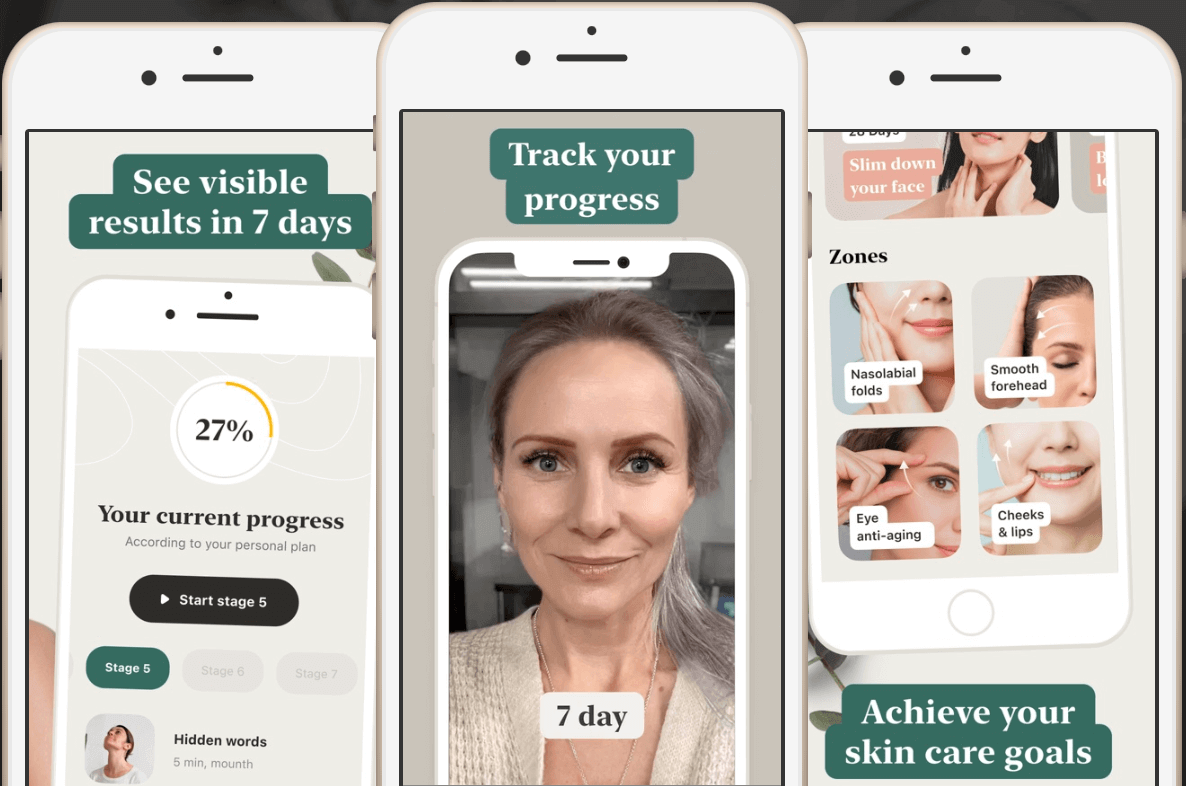 FaceYoga uses AR to show its effectiveness
The Future of Augmented Reality in eLearning
Gamification has been a major trend in online learning for the last decade, and augmented reality is one of the most popular tools for implementing it.
AR is also widely used for simulations, especially in corporate training, where it allows cost-effective hands-on learning in a safe environment. Large infrastructure projects in the UK use it to train station and depot staff before the site is finished.
Children benefit too. Froggipedia teaches them frog anatomy without dissecting actual animals, and SkyView highlights stars and constellations in the night sky.
How Banuba Helps Bring Augmented Reality Innovations
Banuba's Face AR technologies fit the current AR trends well.
- Banuba Video Editor SDK fits short video apps. It covers trimming, audio editing, slideshows, LUTs, background replacement, and AR face masks, and takes about 8 minutes to integrate. Essentially, it is half an MVP for a TikTok competitor, and Chingari is one of the apps built on it.
- Banuba Face AR SDK works well for game development, including Clash of Streamers, where face filters were part of the NFT conversion mechanic. It has also been used by Samsung, Gucci and FaceYoga.
- Banuba's try-on coverage includes accessories try-on (headwear, glasses, scarves, contact lenses, jewelry), eyelashes, hair colour and style try-on, virtual nail polish, and realistic makeup. It is affordable even to mid-sized brands, so check out the case of Looke.
Banuba Face AR SDK supports HTML5, iOS, Android, Windows, macOS, Unity, Flutter, and React Native, and runs on iOS 13+ and Android 8.0+ devices with a 1280x720 camera (recommended) at min 30 FPS. All processing runs on-device, so camera frames do not leave the device. Over 1000 ready-made effects are available in the Banuba asset store.
Our technology is also popular for AR photo booths, which allow fun activities on location and make share-worthy photos for social media.
Conclusion
The future of augmented reality is now split across two screens. Smart glasses are the fastest growing hardware category, led by display-less AI glasses, with Snap Specs and Android XR glasses both arriving in 2026. The phone camera remains the volume channel by a wide margin, and web AR keeps shrinking the distance between seeing an AR experience and using it.
Commercially, the pull comes from live commerce, physical retail, and manufacturing. US live commerce is growing fast off a smaller base than once forecast (actual 2025 sales hit $14.64 billion, up nearly 50% year over year), while virtual try-on keeps earning its place on conversion and returns, and factories treat AR as standard tooling for training, remote collaboration and process design. With third-party effect platforms closing, the practical move for brands is to own the AR experience inside their own app or browser page.
References
9to5Google. (2026). Google and Samsung Android XR glasses: styles and release date. 9to5Google. https://9to5google.com/2026/05/19/google-samsung-android-xr-glasses-styles-release-date/
Coresight Research / Bambuser (cited via Getstream). (2026). Livestream Shopping Key Statistics & Growth Trends 2026. Getstream. https://getstream.io/blog/livestream-shopping-statistics/
eMarketer. (n.d.). Retailers rely on virtual try-on to curb returns, boost conversions. eMarketer. https://www.emarketer.com/content/retailers-rely-virtual-try-on-curb-returns-boost-conversions
eMarketer. (2026, January 16). FAQ on livestream commerce: What marketers need to know about live shopping in 2026. eMarketer. https://www.emarketer.com/content/faq-on-livestream-commerce--what-marketers-need-know-about-live-shopping-2026
IDC. (2026). Smart Glasses Market 2026: XR Is Rewriting the Rules. IDC. https://www.idc.com/resource-center/blog/smart-glasses-surge-the-xr-market-is-rewriting-its-own-rules/
Microsoft. (2025). Anduril and Microsoft partner to advance Integrated Visual Augmentation System (IVAS) program for the U.S. Army. Microsoft. https://news.microsoft.com/source/2025/02/11/anduril-and-microsoft-partner-to-advance-integrated-visual-augmentation-system-ivas-program-for-the-u-s-army/
Snap Newsroom. (2026). Snap and Qualcomm strategic collaboration: Specs 2026. Snap. https://newsroom.snap.com/snap-qualcomm-strategic-collaboration-specs-2026
Social Media Today. (2024). Meta's shutting down Spark AR Studio. Social Media Today. https://www.socialmediatoday.com/news/metas-shutting-down-spark-ar-studio/725443/
Statista. (n.d.). Mobile augmented reality (AR) users worldwide 2023-2028. Statista. https://www.statista.com/statistics/1098630/global-mobile-augmented-reality-ar-users/
-
The future of augmented reality is mobile-first and increasingly browser-based, with smart glasses growing as a second screen alongside the phone. Around a billion people already use mobile AR, and the fastest way to reach them without an app install is Banuba Web AR, which runs face-tracking effects directly in the browser.
-
Augmented reality is a technology of the future because it produces measurable commercial outcomes: retailers get more conversions and fewer returns, educators improve learning outcomes, manufacturers make workers more productive. Banuba's virtual try-on covers accessories, eyelashes, hair colour and style, nail polish and realistic makeup, the category where those retail outcomes show up first.
-
Current augmented reality trends include AI smart glasses becoming a second AR screen, AR live shopping scaling in the West, short video apps setting the effects baseline, AR moving into physical retail and manufacturing, and web AR removing the install step. Short video is the most accessible of these to build for, and Banuba Video Editor SDK ships the editing and AR face mask layer those apps need.
-
Not in this cycle. IDC forecasts about 13.6 million smart glasses units for full-year 2026 against roughly a billion mobile AR users, so the phone camera stays the mass channel while glasses grow alongside it. That is why Banuba builds for mobile first, as covered in this comparison of the best AR SDKs for Android and iOS.
-
Augmented reality overlays digital content onto the real world through a camera or a lens, while the metaverse is a persistent virtual world that people enter through avatars. AR keeps you in your own environment, the metaverse replaces it. Banuba's touchless user interface illustrates the AR side, using face and gesture tracking to control an interface in your actual physical space.