
The best webcam filters software in 2026 splits into two groups: desktop virtual camera apps that add effects to any video call, and SDKs that put filters inside your own product. Banuba Face AR SDK is a real-time, on-device face tracking and AR effects SDK that runs at 30 FPS on mid-range mobile hardware with a -80° to +80° head-angle tracking range.
Which group you need depends on who applies the filter. If it is you, on your own machine, during a Zoom call or a Twitch stream, a desktop app is the whole answer and several of them are free. If it is your users, inside your product, you need an SDK that runs in the browser or in your mobile app. This guide covers eight tools across both groups, with the pricing each vendor published in September 2026, and it explains what happened to Snap Camera, which is the tool most people still search for and which no longer exists.
Webcam face filters software brings entertainment and increased sales. Whether you have an e-commerce, education, video conferencing, or live streaming platform, it can help you boost revenue.
[navigation]
TL;DR:
- Snap Camera was discontinued on 25 January 2023, and Snap has not replaced it. Nothing today injects Snapchat lenses into Zoom, Teams, or OBS as a system-wide virtual camera.
- SplitCam is the strongest free replacement: no watermark, no time limit, and it now ships AI background removal, beauty effects, 3D masks, and face tracking on Windows, macOS, iOS, and Android.
- Banuba Face AR SDK is the option for teams that need filters inside their own app or website rather than on one desktop, and it runs fully on-device so user video never leaves the phone.
- Banuba Face AR SDK tracks 68 facial anchor points under up to 70% occlusion and at distances up to 3.7 meters, which is what keeps a filter locked on in a real room rather than a demo.
- AlterCam's one-time licence is now $59.95 and CyberLink replaced YouCam 9 with YouCam 365 and YouCam 10 Deluxe.
- NCH Debut switched from one-off purchases to subscriptions, so "buy it once" is no longer true for that tool.
- Logitech Capture is free and still downloadable, but its published system requirements stop at macOS 11 on Intel and Windows 10, and Logitech no longer lists it in its software hub.
- Web AR is the cheapest way to reach the widest audience, because a browser filter needs no install and no app store approval, at the cost of some performance.
What to Look for in Webcam Filters Software
Five things separate these tools, and they matter in this order.
Who applies the filter. A desktop app filters your own camera. An SDK lets every one of your users filter theirs. These are different products solving different problems, and mixing them up is the most common mistake in this category.
Whether it is a virtual camera. A virtual camera registers itself as a webcam that Zoom, Teams, Meet, Discord and OBS can select. Without one, the effects only exist inside the vendor's own window. ManyCam, SplitCam, AlterCam and FineCam all install a virtual camera. Logitech Capture does too, but only with Logitech hardware.
What "free" actually means. Free here ranges from genuinely free with no catch (SplitCam) to free with a watermark (AlterCam's trial) to free with a five-minute export cap (FineCam). Read the limit before you commit.
Effects versus enhancement. Face filters (masks, lenses, makeup, morphing) are not the same as camera enhancement (background blur, noise removal, relighting). Tools that only do the second are useful, but they will not give you dog ears.
Platform coverage. Four of the eight tools here are Windows only. If you are on a Mac, the shortlist is much shorter than the category suggests.
If you are comparing SDKs rather than desktop apps, our best face filter SDKs comparison goes deeper on the developer side of this market.
What happened to Snap Camera
Snap Camera was the default answer to this question for years, and it is gone. Snap's own support page now says it "is no longer available as a standalone app" and serves only uninstall instructions, and the shutdown landed on 25 January 2023 (Perez, 2023). Snap points remaining users at the Snapchat Camera for Chrome extension and at Snapchat for Web, and it directs businesses to Camera Kit for building lenses into their own products.
None of those restores the old behaviour. There is no system-wide virtual camera that pushes Snapchat lenses into Zoom, Teams, or OBS anymore. Desktop users who want face effects in a call have to move to one of the tools below, and those tools use their own effect libraries, not Snapchat's.
8 Best Webcam Filters Software in 2026
Banuba Face AR SDK
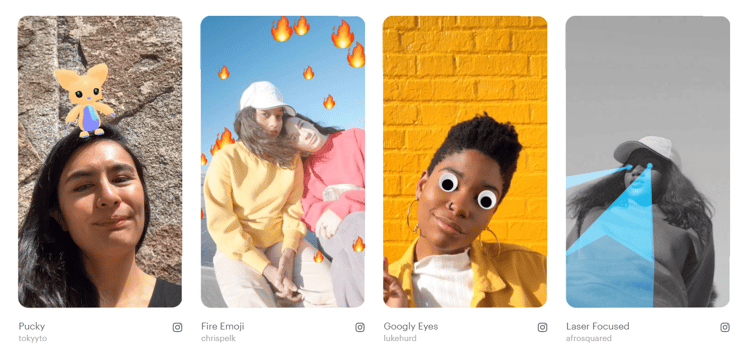
Pricing: 14-day free trial, then a paid licence
Platforms: HTML5, iOS, Android, Windows, macOS, Unity, Flutter, React Native
Banuba Face AR SDK is a set of tools that lets you add webcam filters, virtual makeup try-on, animated avatars, and other face-augmenting features to your own app or website. It is the only entry on this list that your users interact with rather than you, which is why it sits first: it answers a different question from the eight desktop tools around it.
It runs entirely on the device, with no cloud dependency, so user video never leaves the phone. It tracks 68 facial anchor points under up to 70% occlusion and at distances up to 3.7 meters, and a single cross-platform integration covers 97% of Apple smartphones and 80% of Android ones.
What are the core features of Face AR SDK?
- Create your custom filters or license over 1,000 ready-made effects from the asset store
- Integrate a real-time virtual makeup try-on with your business app
- Utilize animated avatars for conferencing, chatting, gaming, lecturing, etc.
- Build your Face AR apps with Unity 3D AR tracking
- Add SFX & voice-changing features
- And many others.
Does Banuba's webcam face filters software match my business?
Here are the core domains we cover:
- E-commerce
- Live streaming
- Education
- Videoconferencing
- Advertising
- Photo & video editors.
The AR Beautification SDK is especially relevant for beauty brands, e-commerce retailers, and social platforms where appearance-enhancing features drive user engagement and purchase confidence.
Are there any famous brands using Face AR SDK now?
Gucci, Samsung, RingCentral, Vidyo, and Schwarzkopf are among the brands using Banuba's webcam filters software.
Is Face AR SDK free?
There is a 14-day free trial so you can test the AR features before buying. After that, Banuba licenses the SDK two ways: a flat annual fee, where usage is unlimited and the cost stays fixed however large the app gets, or an active-user-based fee, which starts significantly lower and grows with your user base. Which one is cheaper depends entirely on how fast you expect to scale.

ManyCam
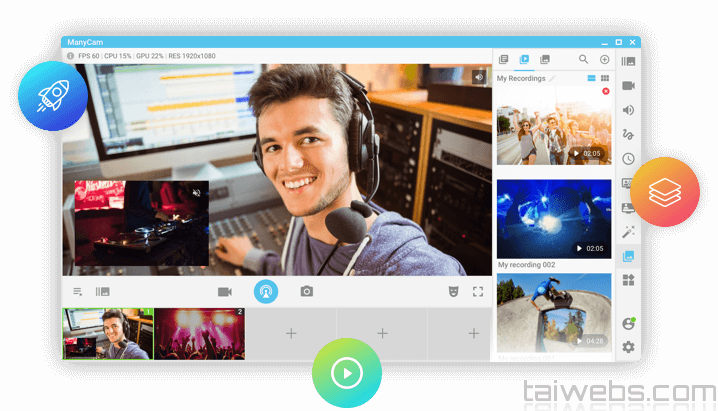
Pricing: Free version; Standard $59/year, Studio $79/year, Premium $99/year, and a three-seat Enterprise plan at $209/year
Platforms: Windows, macOS, iOS, Android
ManyCam, from an AR solutions company with more than 100 million downloads behind it, is one of the best-known virtual camera apps for chats and streams. The current release is ManyCam 9, and there is also a stripped-back ManyCam Lite.
The product tunes your face and appearance on video with 3D masks and effects, and allows adding animated GIFs, emoticons, face accessories, borders, filters, and much other stuff to your videos.
Here are the core features:
- Invite Guests (Beta)
- Virtual Backgrounds.
- Whiteboard.
- Export & Import Presets or Projects.
- Virtual webcam.
- Stream to Facebook & YouTube Live.
- Green Screen (Chroma Key)
- Multiple Video Sources.
The paid plans differ mainly in the number of devices, video sources, and live streaming quality, and the mobile app is included with them. The free version is still offered and is the fastest way to find out whether the virtual camera plays nicely with your conferencing app.

FineCam
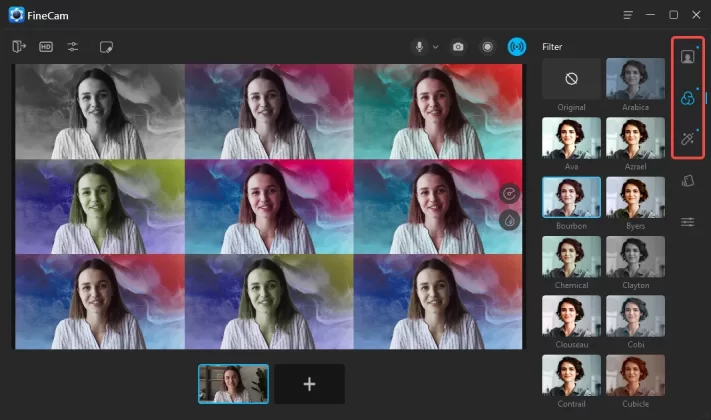
Pricing: Limited free tier; $9.95/month, $29.99/year, or $49.99 for a lifetime licence
Platforms: Windows (FineShare offers only a Windows installer today; a Mac version is announced but not released)
FineCam, now positioned by FineShare as an AI virtual camera, lets you use an iPhone as a webcam, change backgrounds, and enhance video with filters. It works with both still and moving images and operates in tandem with video conferencing software like Zoom or Google Meet.
Watch the free tier before you rely on it: it caps output at 720p, limits exports to five minutes, adds a watermark, and only gives you background removal. The paid tiers unlock up to 4K and more scenes, and the lifetime option is the cheapest way in if you plan to keep using it.
Logitech Capture
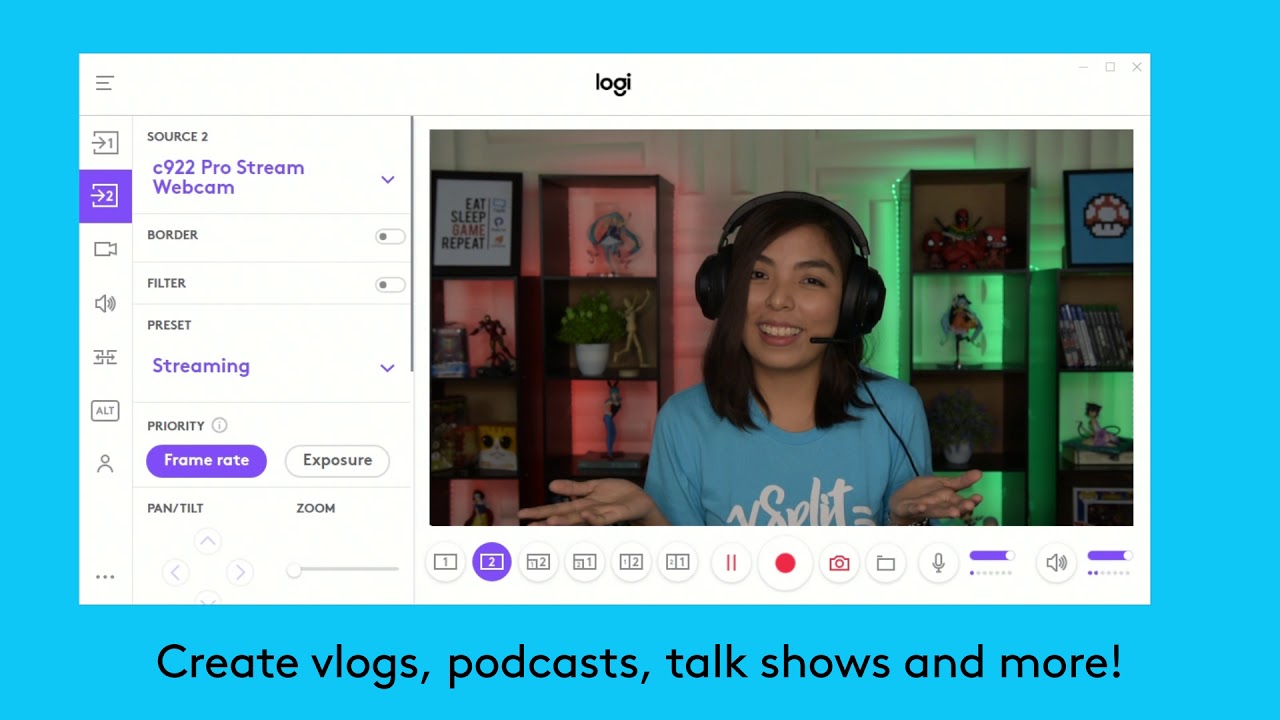
Pricing: Free
Platforms: Windows 10, macOS 10.14 to 11 (Intel), with a supported Logitech camera
Logitech Capture is an all-in-one video content creation tool offering the following features:
- Record from multiple devices
- Switch between 6 available scenes
- Vertical video (9:16) support for social media
- Broadcast your experience in one place
- Add live text overlays
- Studio-style controls to customize your video
- Camera customization to tune your appearance
- And many others.
The product is already integrated with Open Broadcaster Software (OBS), XSplit Broadcaster, XSplit VCam, Restream, Twitch, and many others. Note that the live streaming functionality is Windows-based only.
Two caveats worth knowing before you build a workflow on it. You need one of the Logitech cameras it supports, such as the C920, C922, StreamCam, or Brio. Logitech has said this is the final version of Capture, with no further updates planned. Its published system requirements still stop at macOS 11 on Intel and Windows 10, and it no longer appears in Logitech's own downloads index, which now points streamers to G HUB and Streamlabs instead.The downloads still work; they just are not being promoted.
AlterCam
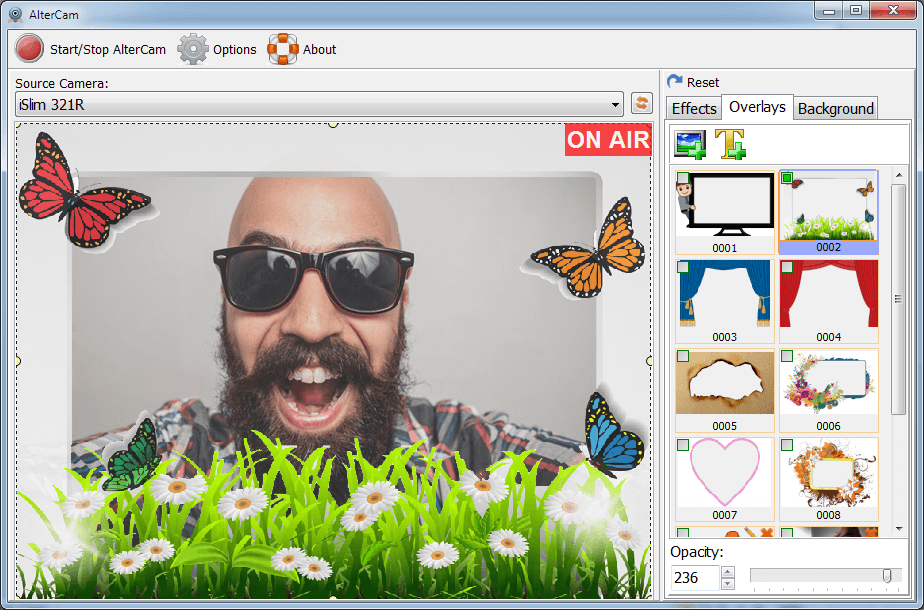
Pricing: $29.95/year or $59.95 one-time for a single user; $480/year or $980 one-time for business. The free trial watermarks your video
Platforms: Windows
AlterCam, from Bolide Software, is still actively developed: version 6.8 shipped in August 2026. Despite its dated interface, it offers 50+ live effects and animations that tune your video content.
Simply put, AlterCam gives a solid video editor package with multiple default effects like blur, mirror, mosaic, combine, underlay, etc. Also, you can add overlays of text, images, animated GIFs, logos, and many others to your video. Broadcast recorded, live, or any other content through your webcam with filters and web effects.
The cheapest way in today is the $29.95 annual licence; the perpetual one costs $59.95.
CyberLink YouCam
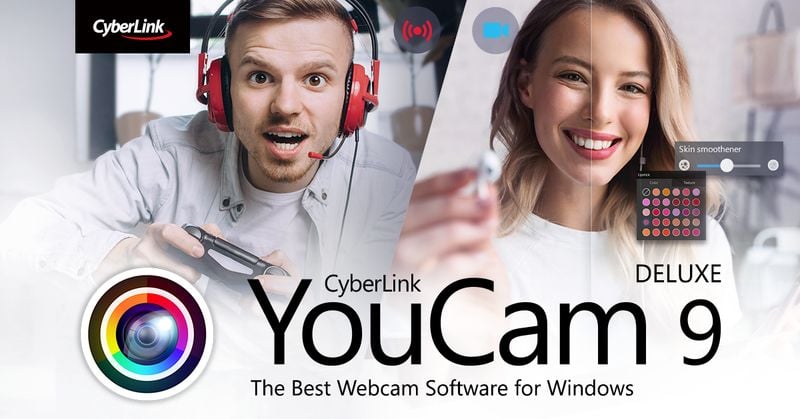
Pricing: YouCam 365 at $49.99/year or $14.99/month; YouCam 10 Deluxe at $59.99 for a lifetime licence; a free trial edition called YouCam Essential
Platforms: Windows
YouCam 9 Deluxe, which older versions of this list recommended, no longer exists. CyberLink now sells YouCam 365 on subscription and YouCam 10 Deluxe as a perpetual licence, and the free entry point is YouCam Essential. One naming trap worth flagging: this is CyberLink's desktop webcam app, not Perfect Corp's YouCam Makeup, which is a separate company selling a beauty try-on SDK and a Shopify app.
YouCam upgrades your video content with over 200 built-in effects, frames, and animojis, with thousands more available to download.
Here are the key features:
- AR webcam beauty filters for live makeup
- Skin smoothing, lighting, sharpening
- AR-based face log-in and faceout
- Multiple frames and scenes
- Real-time video effects, animojis, and gadgets
- Many others.
The product is integrated with multiple video conferencing platforms like Skype and Google Meet. You can professionally sharpen video quality and get a healthy face with real-time skin enhancement tools and virtual makeup for video conferences.
NCH Debut Video Capture Software
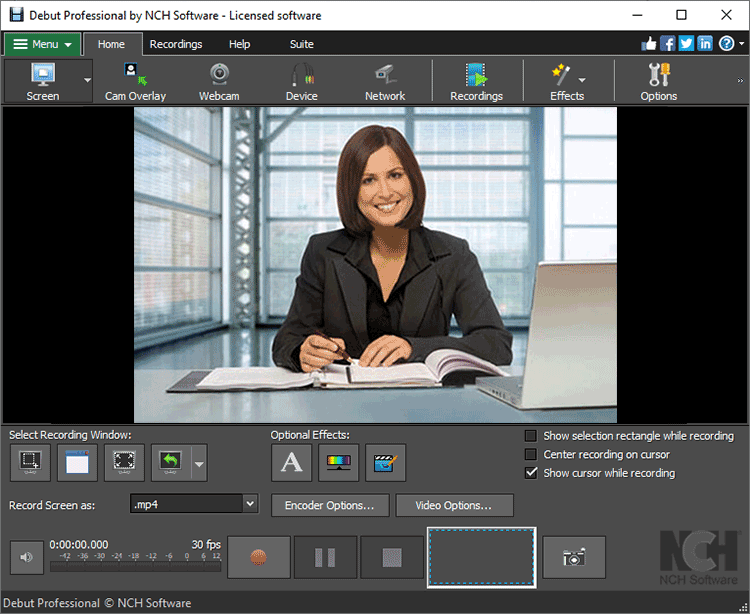
Pricing: Free for non-commercial use; Pro Edition $70/year, Home Edition $60/year, or Pro quarterly at $11.64
Platforms: Windows and macOS
Debut is on version 13.06 on Windows and 13.03 on macOS, both refreshed in 2026, so this is not an abandoned tool.
You can use the product for meetings, classes, lectures, conferences, webinars, and gaming streams in terms of recordings. Despite its record-oriented model, you can also use funny and interactive beauty filters and effects for your videos.
Here are its main features:
- Screen Recorder with Webcam Overlay
- Add Captions to your Captured Videos
- Handy Video Color Adjustments
- Flexible Video Output Settings
- Many others.
Debut is sold as a subscription, not a one-off purchase. Home Edition is still restricted to non-business use, and the free version is still free for non-commercial use, but Pro and Home are now annual or quarterly plans rather than something you buy once.
SplitCam
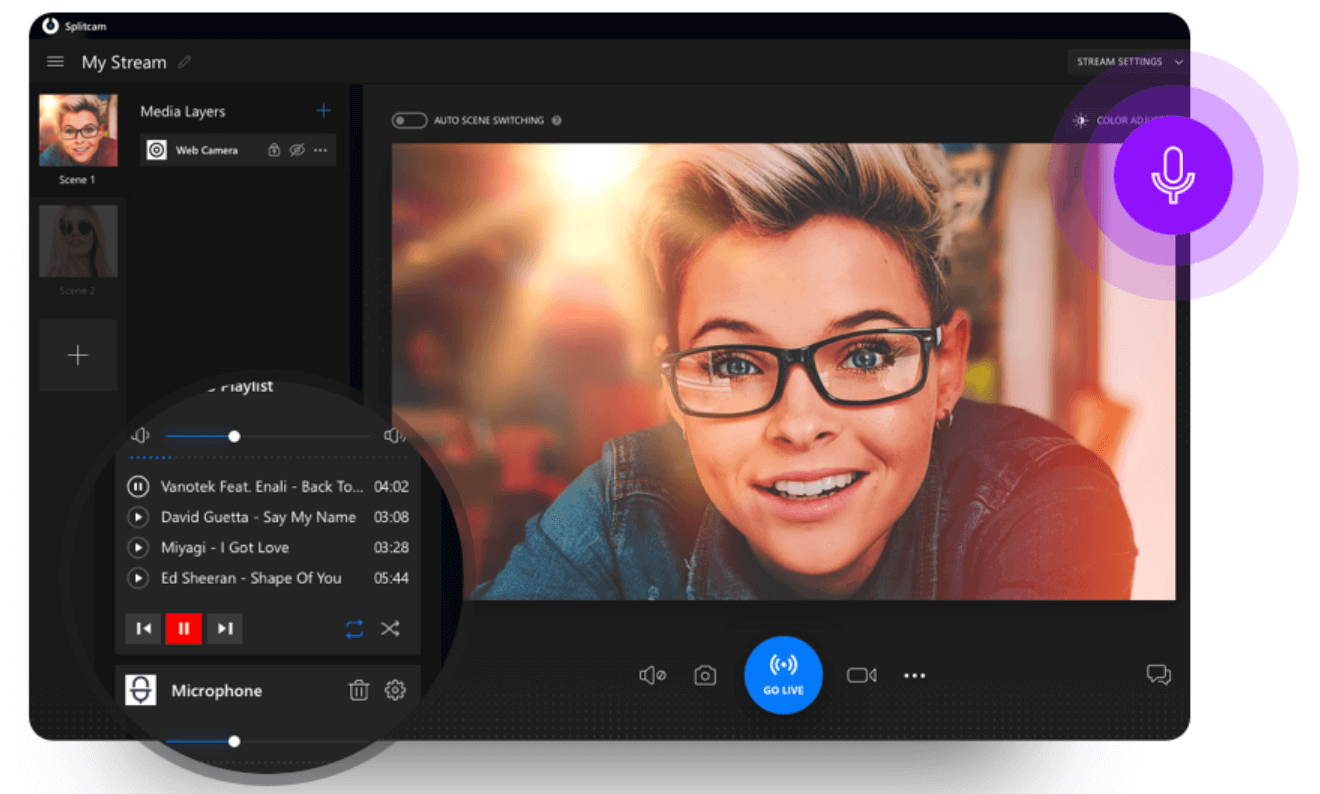
Pricing: Free for personal and commercial use, with no watermark and no time limit
Platforms: Windows 10 and 11, macOS 13+, iOS 16+, Android 8+
SplitCam is the closest thing this list has to a straight Snap Camera replacement, and it is the one to try first if you want face effects in a call and do not want to pay. It has been in development since 2003, the current release is 10.9.2, and the vendor is explicit that there is no paid tier and no upsell.
Its effect set has grown well past the streaming basics it started with. Today it includes AI background removal, beauty effects (skin smoothing, face tracking, face masking, hair and lip colour, eye enlargement), 3D masks, a vertical 9:16 canvas, and OBS project import. It registers a virtual camera for Zoom, Teams, Meet, Discord, and around 60 other apps.
Here are its core features:
- HD video broadcast
- Video splitting
- Realistic 3D masks and filters
- Zoom video feature
- Automatic audio mixer
- Many others.
Webcam Filters Software Compared
|
Tool |
Price |
Platforms |
Best for
|
|---|---|---|---|
|
Banuba Face AR SDK |
14-day trial, then flat annual or active-user licence |
HTML5, iOS, Android, Windows, macOS, Unity, Flutter, React Native |
Putting filters inside your own product |
|
ManyCam |
Free tier; $59 to $99/year |
Windows, macOS, iOS, Android |
Multi-source streaming setups |
|
FineCam |
Free tier; $9.95/mo, $29.99/yr, $49.99 lifetime |
Windows |
Using a phone as a high-quality webcam |
|
Logitech Capture |
Free |
Windows 10, macOS 10.14 to 11 (Intel) |
Owners of supported Logitech cameras |
|
AlterCam |
$29.95/yr or $59.95 one-time |
Windows |
A cheap perpetual licence on Windows |
|
CyberLink YouCam |
$49.99/yr or $59.99 lifetime |
Windows |
Beauty and makeup effects on Windows |
|
NCH Debut |
Free non-commercial; $60 to $70/year |
Windows, macOS |
Recording calls and classes with overlays |
|
SplitCam |
Free |
Windows, macOS, iOS, Android |
The best free all-rounder and Snap Camera replacement |
Why Use AR for Webcam Face Filters
Compatibility
Webcam filters built into a website can run on almost any device that has a browser and a camera. It means you get access to a large audience.
Lower costs
Building and maintaining a single web browser application is cheaper than two mobile apps. Even though using frameworks like Flutter or React Native can decrease the development time and expenses, Web AR wins overall.
Freedom from app stores
If you need webcam filters but your business is connected with tobacco or alcohol products, you won't be able to get listed on the App Store or Google Play. With your own website, there are no such issues.
Cheaper user acquisition
There are fewer steps a person should take to interact with your web app compared to a mobile app. No download is required - everything works from the get-go. This means that every dollar invested in promotion brings higher returns in Web AR.
That shift, from a filter you install on one desktop to a filter that runs for everyone in a browser tab, is the same shift that turned try-on from a novelty into a shopping feature. It is traced in detail in this piece on how browser filters grew into no-code AR try-on.
However, this technology also has its drawbacks.
The main one is lower performance. Mobile apps can access more resources of the device, so they run faster and provide better image quality. Web AR is inherently slower due to working within the limitations of the browser.
The second major disadvantage is that an internet connection is a must. Mobile apps can work offline after downloading the necessary filters and effects. Web apps can't do that.
If you want to learn about Web AR in detail, feel free to check out our dedicated article: Web AR: A Complete Guide To App-less Augmented Reality, and our tested roundup of Web AR APIs.
How to Add Filters to Your Webcam
Let’s go through the specific steps.
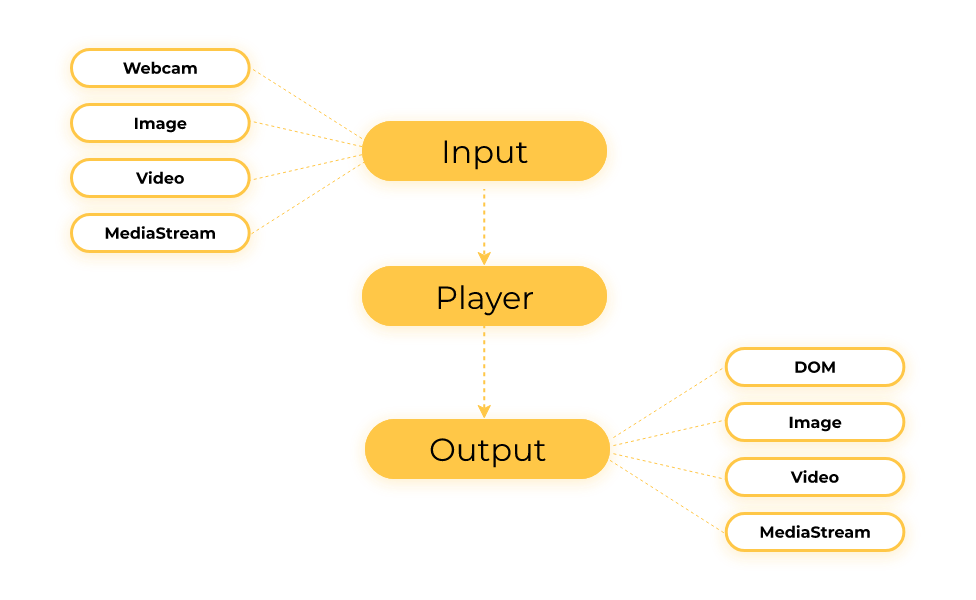
1. Get Banuba Face AR SDK
Banuba's Web Augmented Reality SDK is a ready-made module that can be quickly integrated into a mobile, web, or desktop app and handle the webcam face filters functionality.
The Web AR version includes three components:
- BanubaSDK.wasm - a low-level high-performance module compiled to WebAssembly;
- BanubaSDK.data - face detection neural networks and auxiliary AR data;
- BanubaSDK.js - a JavaScript wrapper for consuming the WebAssembly module with browser-specific things like WebCamera usage and DOM rendering.
You can check out the details, including input/output options and code samples in the instruction.
The SDK runs in browsers that support WebGL 2.0 and higher, which covers current Chrome, Firefox, and Safari on both desktop and mobile. To run the demo app, you will also need to install Node.js and a git client, although these two are optional.
It also contains a separate .simd.wasm file for SIMD-enabled browsers (e.g., Chrome 91+ and Firefox 90+).
This is what the SDK includes:
- Real-time face tracking. Detecting multiple faces on the camera feed to apply effects to them later or on the go.
- Rendering engine. The core element is responsible for drawing all the effects.
- Face filters. This is the functionality responsible for applying masks, avatars, text/gif overlays, etc. The filters themselves are downloaded/created separately.
- Interactive triggers. This feature allows launching dynamic effects by using facial expressions or hand gestures.
- Background replacement. Capability to detect a person in the picture and replace everything else with a static image, gif, or video.
- Hair/lips/eyes segmentation. Locating a facial feature and changing it in the picture. This could be used to recolor hair, apply virtual makeup, or test contact lenses.
2. Installation
First, you need to download the SDK itself and the token necessary for the whole system to work. To get them, send us a message via a contact form on our website.
You can find the sample of the installation code here, and ready-made effects to test with on the Demo Face Filters page.
3. Launch a demo app
This is a simple process.
- Clone the Web AR demo app git repository
- Place your Banuba client token into BanubaClientToken.js inside the cloned folder
- Run a local server inside the folder
- Open localhost:8080 and get to work
- To try other effects, drop the effect zip into the import folder and add its filename to import/effectsList.js.
For ease of use, check out the API reference.
Wrapping Up
If you only need filters on your own camera, start with SplitCam, because it is free, it has no watermark, and it covers every major platform. If you already own a supported Logitech camera, Capture costs nothing to try. If you want a perpetual licence on Windows, AlterCam and YouCam 10 Deluxe are the two to compare.
If your users are the ones who need filters, the desktop tools cannot help and an SDK is the answer. Web AR is flexible, reaches a large audience, and is straightforward to integrate. Follow the steps in this guide to see how webcam face filters would work on your website, and remember there is a 14-day free trial of the Banuba Face AR SDK. Contact us, get your token, and start testing.
References
AlterCam. (n.d.). Purchase AlterCam. Bolide Software. https://altercam.com/purchase.html
CyberLink. (n.d.). Buy YouCam. https://www.cyberlink.com/store/youcam/buy_en_US.html
FineShare. (n.d.). FineCam pricing. https://www.fineshare.com/finecam/buy.html
Logitech. (n.d.). Logitech Capture. https://www.logitech.com/en-us/software/capture.html
ManyCam. (n.d.). ManyCam virtual camera and live video software. https://manycam.com/
NCH Software. (n.d.). Debut video capture and screen recorder software. https://www.nchsoftware.com/capture/index.html
Perez, S. (2023, January 5). Snap is shutting down its desktop camera app that allows users to apply filters during video calls. TechCrunch. https://techcrunch.com/2023/01/05/snap-is-shutting-down-its-desktop-camera-app-that-allows-users-to-apply-filters-during-video-calls/
Snap. (n.d.). Snap Camera. Snapchat Support. https://help.snapchat.com/hc/en-us/articles/7012304217876-Snap-Camera
SplitCam. (n.d.). SplitCam free webcam software. https://splitcam.com/
-
Yes. Banuba Face AR SDK adds Snapchat-like filters, AR lenses, beautification, and real-time facial animation to live-streaming, social, and beauty apps, and you can either build your own effects or license over 1,000 ready-made ones from the Banuba face filters asset store. Unlike Snapchat's own tools, it processes every frame on the device, with no cloud dependency.
-
A webcam filter reads each frame from the camera, finds the face in it, works out where the features sit, and draws the effect on top before the frame reaches your video call or stream. The accuracy of that middle step is what makes a filter stick to your face instead of sliding around, which is why it is the part vendors compete on. Banuba's real-time face tracking uses neural networks trained to locate 68 facial anchor points, and it works under partial occlusion and at a distance.
-
Any SDK built on Web AR runs in the browser with no install and no app store approval, which is the main reason web filters reach a wider audience than mobile ones. Banuba Face AR SDK ships a Web AR build (a WebAssembly module, a data package, and a JavaScript wrapper) that runs in Chrome, Firefox, and Safari with WebGL 2.0 support. Our roundup of the best Web AR SDKs compares the browser-based options side by side.
-
SDK pricing in this category is quoted, not listed, because it depends on the feature set and the size of your user base. Banuba licenses its Face AR SDK two ways: a flat annual fee, where usage is unlimited and the cost does not move as the app grows, or an active-user-based fee, which starts lower and scales with usage. You can see how the factors break down on the Banuba Face AR SDK pricing page, and there is a 14-day free trial before any of it applies.
-
The official technical documentation for Banuba Face AR SDK is available online and includes requirements, setup instructions, and configuration details:
- Banuba Face AR SDK iOS documentation
- Banuba Face AR SDK Android documentation
- Banuba Face AR SDK Flutter documentation
- Banuba Face AR SDK React Native documentation
- Banuba Face AR SDK Web documentation
- Banuba Face AR SDK Unity documentation
- Banuba Face AR SDK Desktop documentation
This Banuba Face AR SDK documentation should be your primary reference during integration.
-
You can access official integration code samples for the Banuba Face AR SDK on GitHub. Banuba provides platform-specific examples to help you integrate faster:
- Banuba Face AR SDK iOS integration code sample
- Banuba Face AR SDK Android integration code sample
- Banuba Face AR SDK Flutter integration code sample
- Banuba Face AR SDK React Native integration code sample
- Banuba Face AR SDK Desktop integration code sample
- Banuba Face AR SDK Web integration code sample
- Banuba Face AR SDK Unity integration code sample
These Banuba Face AR SDK repositories include setup instructions and minimal working examples for quick deployment.
-
Yes. The Banuba Face AR SDK includes an LLM-friendly documentation file designed for AI-assisted development and internal knowledge systems:
This structured Banuba Face AR SDK text file can be used with AI tools to streamline onboarding and developer workflows.
-
The Banuba Face AR SDK provides official cross-platform plugins to simplify integration into hybrid applications:
These Banuba Face AR SDK plugins are maintained by Banuba and support faster implementation for cross-platform apps.