

[navigation]
Key takeaways
- Virtual try-on closes the "will this shade suit me?" gap that drives most beauty cart abandonment.
- Océane, a Brazilian beauty brand, lifted its add-to-cart rate from 3% to 20.15%, then to a record 32%, after integrating Banuba TINT.
- TINT supports 16 makeup product types with skin-tone-aware application and 16+ product categories, and a typical store launches it in under two weeks.
Why do beauty brands lose online sales without virtual try-on?
Color is the hardest thing to sell online. A static swatch or a photo on a model can't show how a foundation reads against a specific skin tone or how a lipstick looks under a shopper's own lighting, so buyers hesitate, guess, or leave. The single most common complaint about earlier try-on tools made this worse: product color was not displayed correctly, which eroded the trust the feature was supposed to build.
That uncertainty is expensive. Across e-commerce beauty, the average add-to-cart rate sits around 3%. Every shopper who likes a product but isn't confident enough to add it is a lost margin, and the gap widens as more discovery moves to mobile.

How does virtual makeup software lift the add-to-cart rate?
Virtual makeup software replaces guesswork with a real-time preview on the shopper's own face. Two TINT capabilities matter most for conversion. First, it ships with 16 makeup product types with skin-tone-aware application, which directly addresses the "color not displayed correctly" complaint: shades render true against the individual's skin rather than a generic overlay. Second, it covers 16+ product categories: makeup, eyewear, hair color, contacts, jewelry, and accessories, so a brand can extend try-on across its whole catalog instead of one hero line.
The effect on behavior is straightforward: when a customer can confirm a shade suits them, the decision to add it to the cart gets easier, and the move from trying to buying gets shorter.
What did Océane achieve with TINT?
Océane is a Brazilian cosmetics manufacturer and retailer, and one of the country's fastest-growing beauty brands. Virtual try-on was still a novelty in its market, so the team started with a pilot on just two of its newest categories, concealer and foundation.
Within the first month, the add-to-cart rate for those items rose from the 3% industry average to 20.15%, over a 600% increase, and demand outran stock faster than the company could manufacture more. It didn't stop there: the Océane add-to-cart rate later set a record 32%, meaning roughly a third of shoppers who tried a product online placed it in their cart. The brand has since expanded try-on beyond its pilot categories.
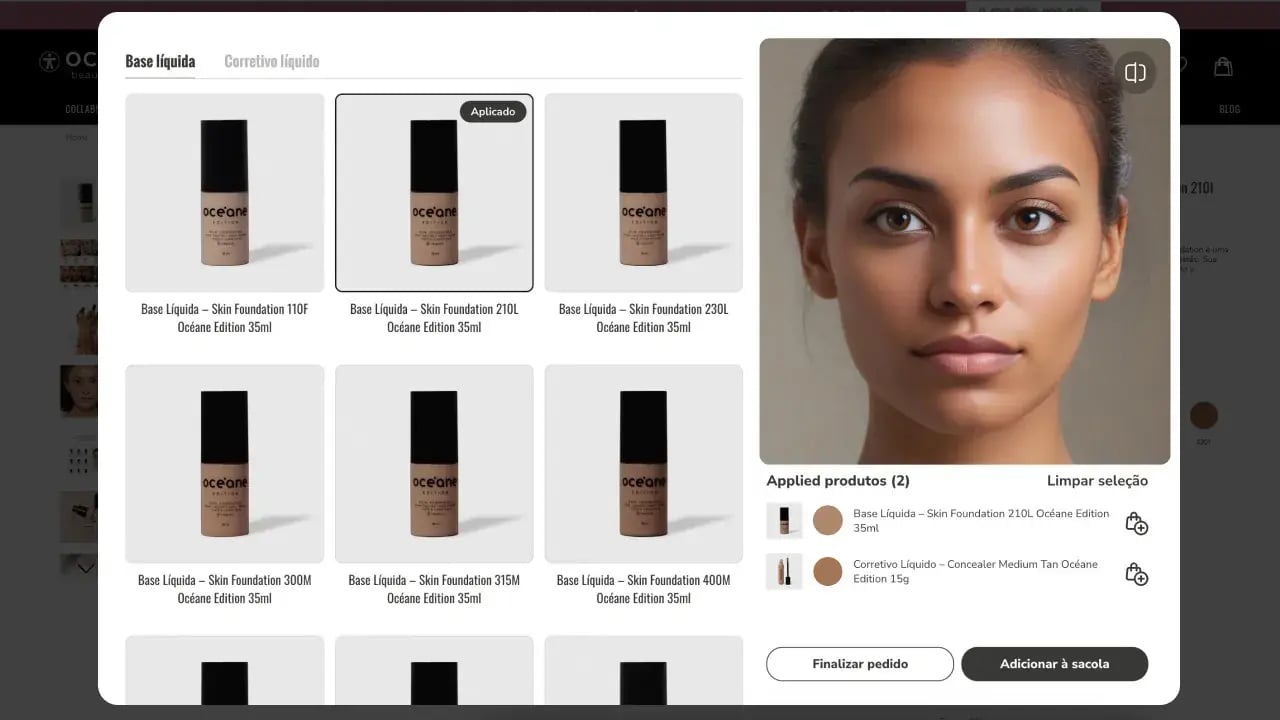 Océane makeup virtual try-on interface by Banuba
How does another beauty brand use makeup try-on?
Océane isn't an outlier. Looké, a niche halal, vegan, and cruelty-free beauty brand from Indonesia, built a virtual try-on app on Banuba so customers could test its entire product line in-app and see where to buy. The app passed 50,000+ installs in a few months with mostly five-star ratings, and the try-on feature lifted engagement, in-app sessions, and purchases. Different market, same pattern: let shoppers try before they decide, and more of them decide to buy.

What does the integration take to ship?
TINT is web-based, and a typical store launches it in under two weeks, so the feature reaches customers without a multi-month build. Teams integrate against the Banuba documentation and start from working beauty try-on samples on GitHub for Android, iOS, and web. That keeps the engineering lift small while the conversion upside lands on the product page itself.
Ready to lift your online sales?
If browsers are liking your products but not adding them to cart, virtual try-on is the most direct lever you have. See what makeup software can do for your store. Book a demo and start a free trial.
-
Yes. TINT applies 16 makeup product types with skin-tone-aware rendering, so shades read true on an individual's skin instead of a generic overlay, the specific gap that made shoppers distrust earlier try-on tools.
-
Production deployments see add-to-cart rates above 30% and 600%+ engagement lift. Océane moved from the 3% industry average to 20.15% in its first month and later to a record 32%.
-
TINT covers 16+ categories: makeup, hair color, glasses, contacts, jewelry, and accessories, tried on individually or as a complete look.
-
TINT is web-based and typically launches in under two weeks, with documentation and ready-made beauty try-on code samples to speed integration.
-
No. TINT runs in the browser for web e-commerce, and the same engine is available for mobile, so customers try products without downloading anything.
