
The best video editing software for creating educational content in 2027 is Camtasia, Descript and DaVinci Resolve, and this guide comes from Banuba. Banuba's Video Editor SDK is a cross-platform video editor for iOS, Android, Flutter and React Native, adding a TikTok-style editor from 25 Mb. Integrate in minutes manually, or with AI-assisted coding. Banuba sells that SDK, which is the route teams take when the editing has to happen inside their own learning product rather than on a laptop.
Camtasia is the all-round pick because it records screen, camera and audio on separate tracks and exports a SCORM package straight into an LMS. Descript edits video by editing its transcript, which is the fastest way through an hour of raw lecture footage. DaVinci Resolve is free up to 3840x2160 with no watermark, so a media programme can standardise on it without a budget line. Microsoft Clipchamp is included at no extra cost with Microsoft 365 A3 and A5, which makes it the cheapest option for a school already on Microsoft.
TL;DR:
- Camtasia is the only tool here that both records a lecture and exports a scored SCORM package to an LMS, and it now starts at $39 a year for individuals.
- TechSmith retired the Results Service and the online quiz editor, so Camtasia quizzes still play for viewers, but TechSmith no longer collects quiz data; LMS scoring still works.
- DaVinci Resolve stays the strongest free option: 3840x2160 output, no watermark, no time limit, with the paid Studio licence a flat $295 one-time.
- Clipchamp for education ships free with Microsoft 365 A3 and A5, including screen and webcam recording, auto subtitles and AI voiceovers.
- Apple launched Apple Creator Studio in January 2026 at $12.99 a month, or $2.99 a month for students and educators, and the old $199.99 Pro Apps Bundle for Education is no longer sold on its own.
- Lightworks publishes no prices on its pricing page, and its free tier caps export at 720p MP4 with a licence that has to be renewed every 90 days.
- OpenShot 4.0, released in August 2026, added screen, webcam, and microphone recording, which makes a free open-source editor viable for classroom capture for the first time.
- Teams building their own learning app skip desktop editors entirely: Banuba's Video Editor SDK covers recording, trimming, captions, and effects in one integration, and Banuba lists education apps as a supported use case for microlearning video.
Educational video content is thriving in recent years as both teachers, coaches, mentors, and students prefer watching long- and short-term recordings or live streaming videos to text-only content. This format is far more engaging and easy to consume compared to old-fashioned read-only manuals, books, etc.
E-learning platforms, massive open online course (MOOC) providers, and skill- and knowledge-sharing websites are among the leaders in producing educational videos. To stay competitive, vendors should provide user-centric killer features that engage and inspire consumers to join and use products.
How to Choose Educational Video Editing Software
Five things separate a tool that survives a term from one that gets abandoned after two lectures.
- Screen and camera recording in the same app. Most educational video is a screen with a talking head in the corner. If the editor cannot capture both, you are stitching two workflows together every week.
- Captions you do not type by hand. Accessibility rules in most institutions require captions, and manual transcription is the single biggest time sink in course production.
- LMS delivery. A SCORM or xAPI package that carries the video, its captions, and its quiz into Moodle, Canvas, or Blackboard is worth more than any effect library.
- Licensing that fits an institution. Academic pricing, campus licensing and transferable keys matter more than the headline consumer price.
- Platform reach. A Windows-only editor is unusable in a Mac, iPad or Chromebook classroom, and that rules out several well-known names.
Teams that end up building their own video editing software for creating educational content start from a video editor SDK rather than a desktop app, because the editing has to happen inside the learning product itself. That route is covered further down.
Top Educational Video Editing Software in 2027
|
Tool |
Best for |
Price |
Platforms |
Education plan
|
|---|---|---|---|---|
|
Camtasia |
Lecture and course recording end-to-end |
$39 to $599 a year |
Windows, macOS, browser |
Educators $162.36 a year, students $45 a year |
|
Descript |
Editing a long recording through its transcript |
$16 to $50 a month |
macOS, Windows 11, web |
Discount by application, rate not published |
|
Microsoft Clipchamp |
Schools already on Microsoft 365 |
Free, premium via Microsoft 365 |
Browser, Windows |
Free with Microsoft 365 A3 and A5 |
|
DaVinci Resolve |
Free professional-grade production |
Free, Studio $295 one-time |
Windows, macOS, Linux |
Free training books and certification |
|
Final Cut Pro |
Mac-based production teams |
$299.99 one-time or $12.99 a month |
macOS, iPadOS |
Creator Studio $2.99 a month |
|
OpenShot |
Open-source capture on any machine |
Free |
Windows, macOS, Linux, Chrome OS |
None |
|
Lightworks |
Students who need professional tools cheaply |
Not published |
Windows, macOS, Linux |
Lightworks EDU, 50% off Pro |
|
iMovie |
A free first editor on Apple hardware |
Free |
macOS, iOS, iPadOS |
None |
1. Camtasia: best all-round for lectures and courses
Camtasia is TechSmith's screen recorder and editor, and it is the one tool on this list built around teaching rather than adapted to it. It records the screen, the camera, system audio, and the microphone onto separate tracks, so a mistake in the voiceover does not cost you the screen capture.
The core features include:
- Multitrack capture of screen, webcam, system audio, and microphone as independent tracks
- Text-based editing through Camtasia Audiate, so you cut the video by cutting its transcript
- Cursor effects, zooms and callouts designed for software walkthroughs
- Instant captions and translations
- AI tools for voice generation, avatars, background removal and noise removal
- SCORM export to an LMS carrying video, the Smart Player, captions, a table of contents and in-video quizzes, with a configurable passing score and required viewing percentage
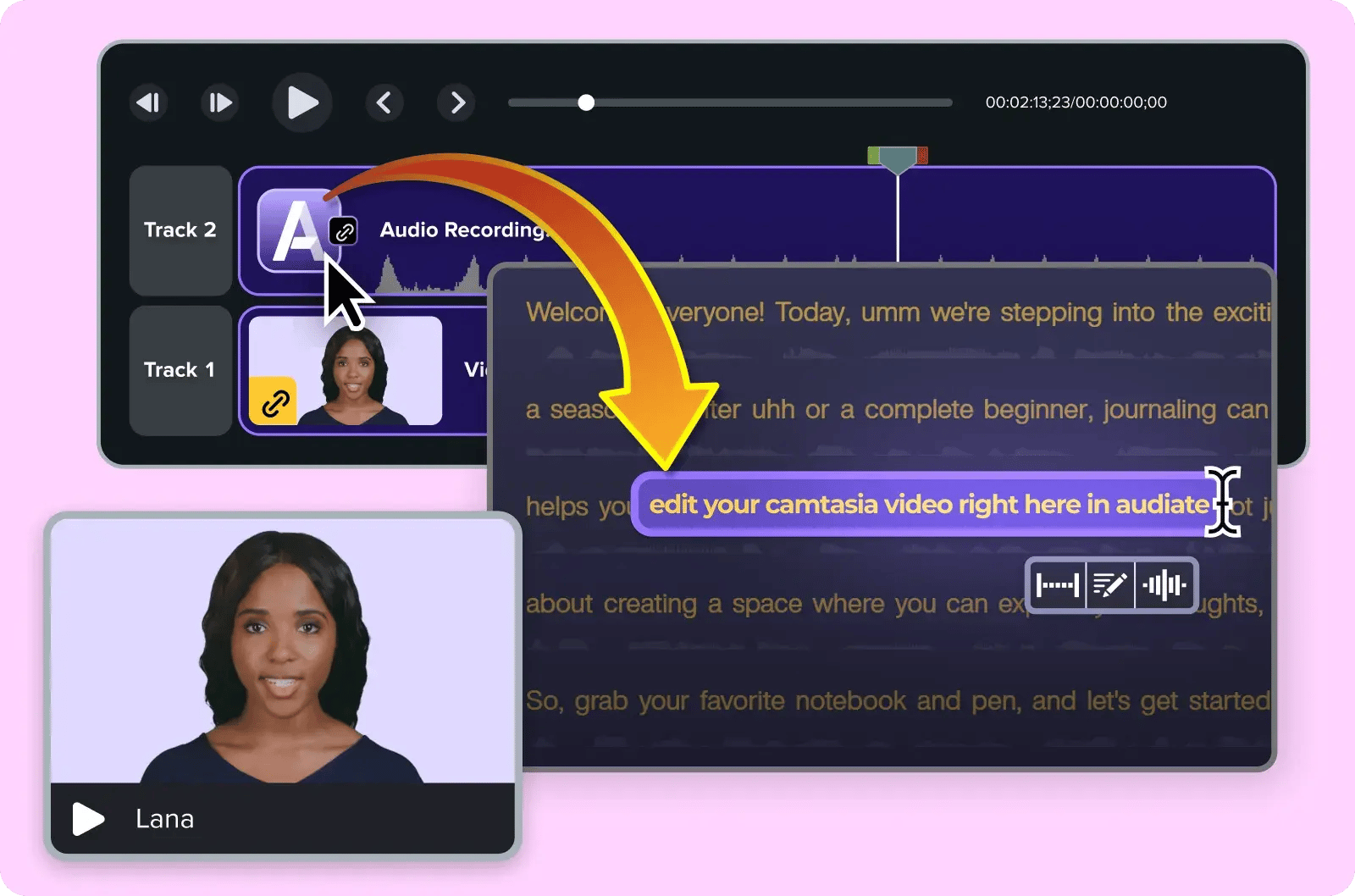 Camtasia| Screen recorder and editor
Camtasia is subscription-only. Individual plans run Starter $39 a year, Essentials $179.88 a year, Create $249 a year, and Pro $599 a year. Business is $198 per user a year for teams up to 99 seats. Accredited institutions pay $162.36 per educator a year, and verified students in the US, UK, and Canada pay $45 a year.
One caveat that older guides miss: TechSmith has retired the Results Service and the online quiz editor. Quizzes still display on a video, but TechSmith no longer collects the data from them. Scoring through a SCORM package in your LMS still works, so plan your assessment around the LMS, not around TechSmith hosting.
2. Descript: best for transcript-based editing
Descript turns a recording into a document. It transcribes what was said, and deleting a sentence from the transcript deletes it from the video. For a sixty-minute lecture with filler words and false starts, that is a different order of effort from scrubbing a timeline.
The core features include:
- Edit by transcript, with filler-word removal across the whole recording in one pass
- Studio Sound, a one-click pass that removes room noise and evens out a voice
- Underlord, an AI agent that cuts a raw recording down to a tight edit
- Clipping that pulls short segments out of a long recording for each platform
- Generative fill for video, audio, music, and images
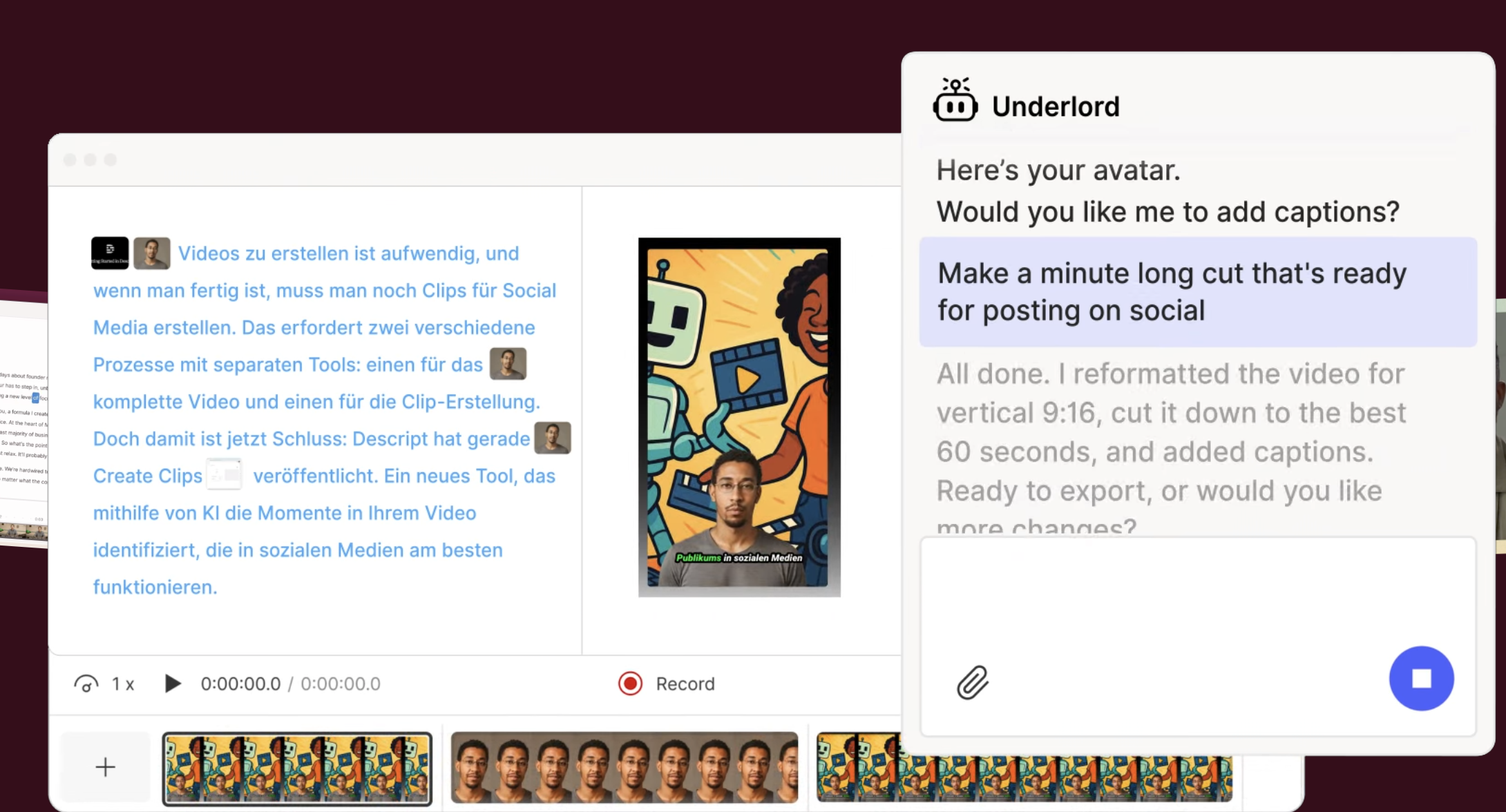
Descript |Transcript-based editing
Paid plans are Hobbyist $16 a month billed annually, Creator $24 a month billed annually, and Business $50 a month billed annually, with Enterprise quoted on request. The free plan gives one hour of media a month at 720p with a watermark, which is enough to test the workflow and not enough to teach with. Students, educators, and non-profits can apply for a discount, though Descript does not publish the rate. It runs on macOS 14 or newer, Windows 11, and the web.
3. Microsoft Clipchamp: best free editor for Microsoft 365 schools
Clipchamp is Microsoft's browser-based editor, and for an institution already paying for Microsoft 365, it is effectively free. Clipchamp for education is included at no extra cost with Microsoft 365 A3 and A5, which removes the procurement conversation entirely.
The core features include:
- Screen and webcam recording, separately or at the same time, with a teleprompter
- Auto-generated subtitles in multiple languages and free audio transcription
- AI voiceovers in multiple languages
- Background noise removal and silence detection
- Save straight to OneDrive as MP4 or MP3, with commenting for feedback
- Central IT controls, SSO, COPPA and GDPR compliance
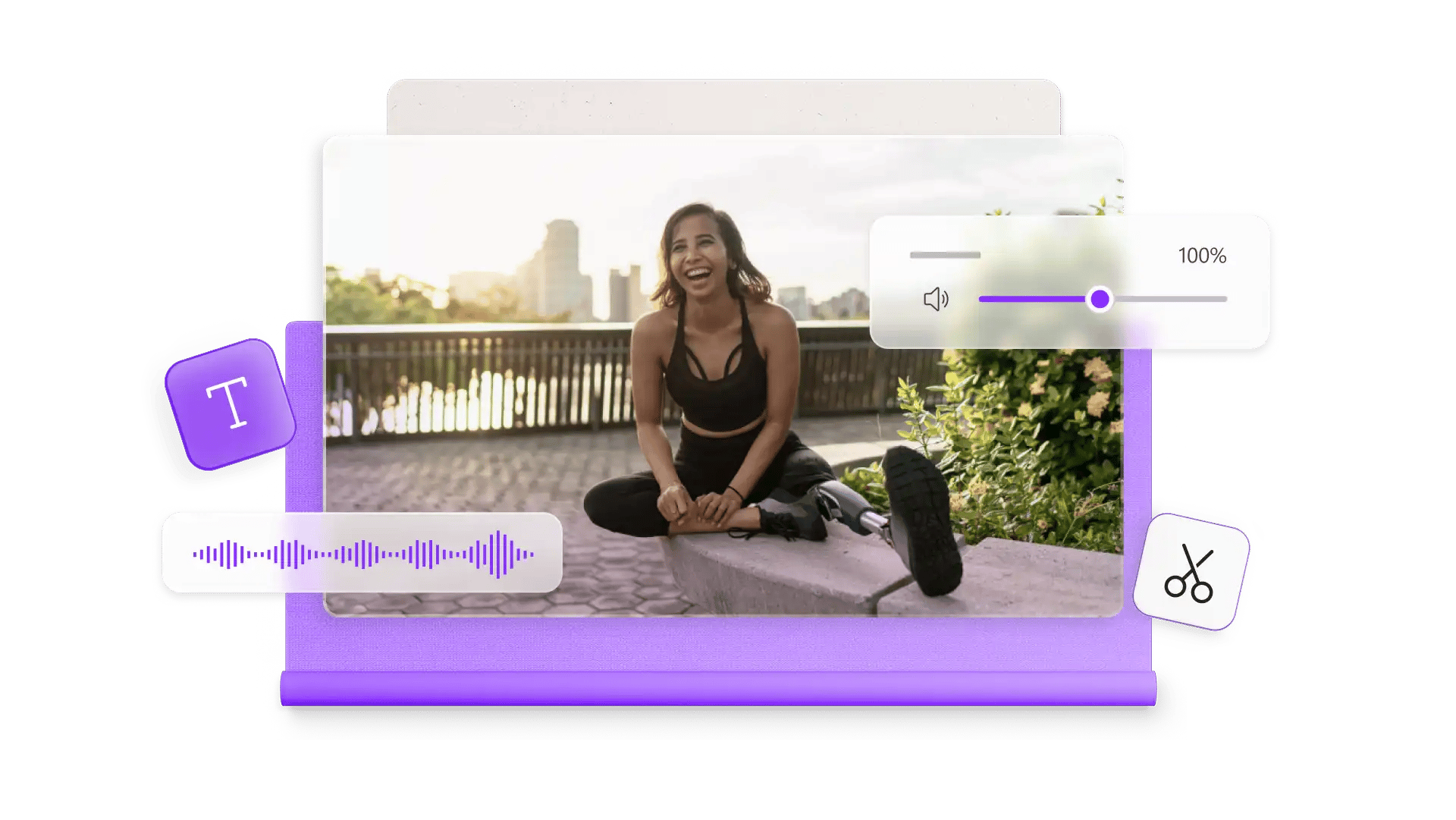
Clipchamp | Online video editor
The consumer free plan now exports at 1080p with no watermark, which is unusually generous for a browser editor. Premium features such as 4K export arrive through a Microsoft 365 Personal or Family subscription rather than a standalone Clipchamp plan. The two real limits are platform and delivery: there is no Mac app and no mobile app, and Clipchamp does not produce a SCORM package, so LMS delivery means uploading a file.
4. DaVinci Resolve
DaVinci Resolve is Blackmagic Design's post-production suite, and its free version is the most capable free editor available to an education programme. The current release is DaVinci Resolve 21, which added a Photo page alongside the existing Cut, Edit, Fusion, Color and Fairlight pages.
It is a less intuitive platform than Premiere or Final Cut, but its main advantage is its advanced feature set that users can get free of charge. This makes DaVinci a perfect choice for semi-pro tech-savvy coaches, teachers, and mentors familiar with basic video editing.
The core vendor's functionality includes:
- Six integrated pages: Photo, Cut, Edit, Fusion for node-based visual effects, Color, and Fairlight for audio
- Fairlight audio handling up to 2,000 tracks in real time
- The DaVinci AI Neural Engine behind face recognition, object detection, smart reframing and automatic colour matching
- 32-bit float colour with YRGB colour science and HDR grading
- Blackmagic Cloud multi-user collaboration on the same timeline
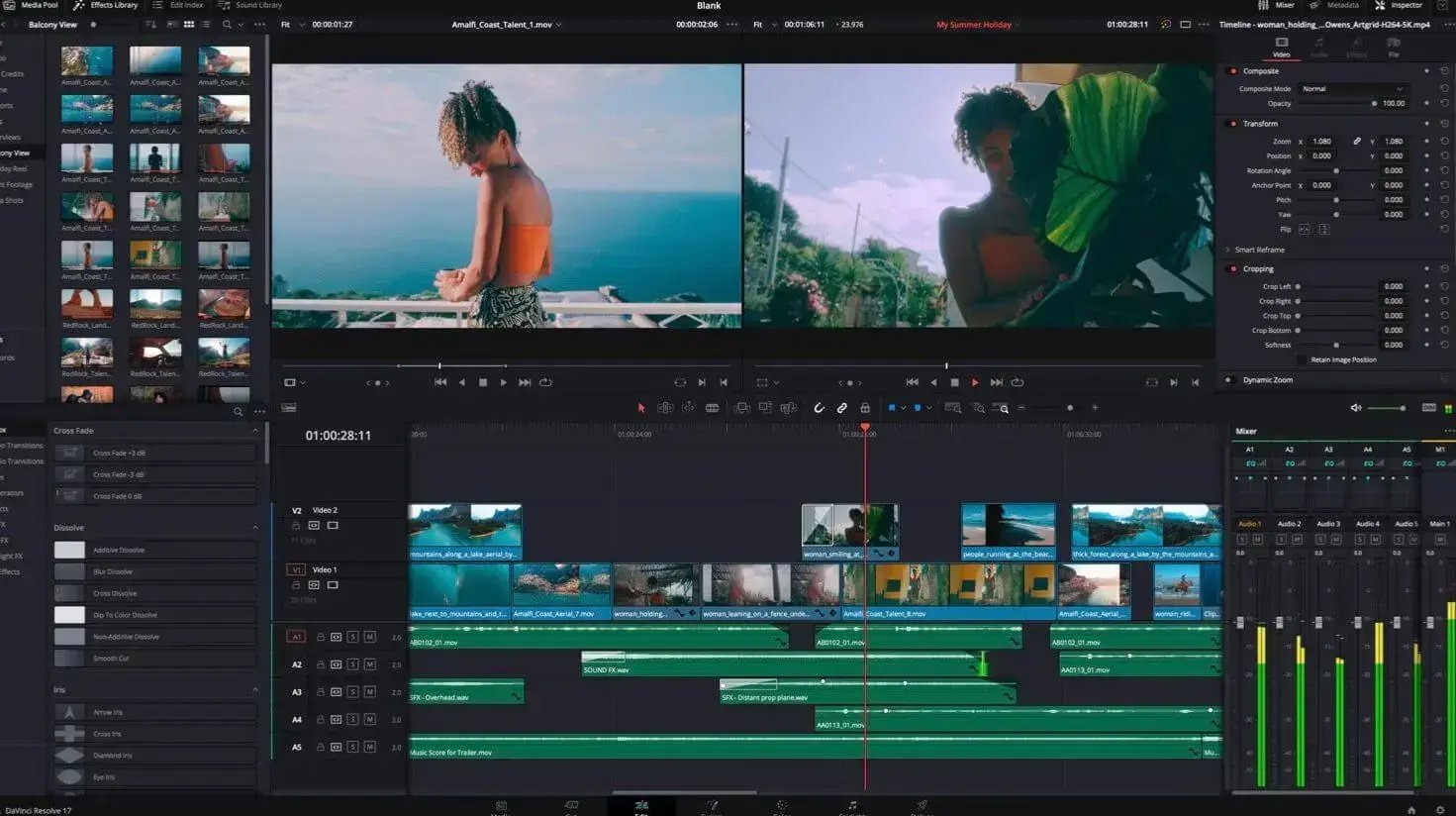 DaVinci Resolve | Professional software to create stunning videos
The free version exports 8-bit video up to 60fps at resolutions up to 3840x2160 with no watermark and no time limit, which covers almost everything a course produces. DaVinci Resolve Studio is $295 as a one-time payment and adds 10-bit, higher frame rates, the Neural Engine extras, noise reduction, and text-based editing. Blackmagic does not publish an academic discount, because the free version is the education offer: it also publishes free training books as PDFs with lesson files, and runs a Certified DaVinci Resolve Professional programme with an academic partner category.
5. Final Cut Pro
Final Cut Pro is Apple's professional editor, and in January 2026 the way you buy it changed. It is still available as a one-time $299.99 purchase on the Mac App Store, and it is now also part of Apple Creator Studio at $12.99 a month or $129 a year, alongside Logic Pro, Pixelmator Pro, Motion, Compressor and MainStage.
The core features include:
- The magnetic timeline for moving and trimming clips without collisions or sync problems
- Motion and Compressor integration for 2D and 3D titles, effects and encoding presets
- Apple silicon acceleration, with some features requiring Apple silicon outright
- Final Cut Pro for iPad as a companion, on an M1 or later iPad, iPad (A16) or iPad mini (A17 Pro)
- Premium templates and a royalty-free asset library through Creator Studio
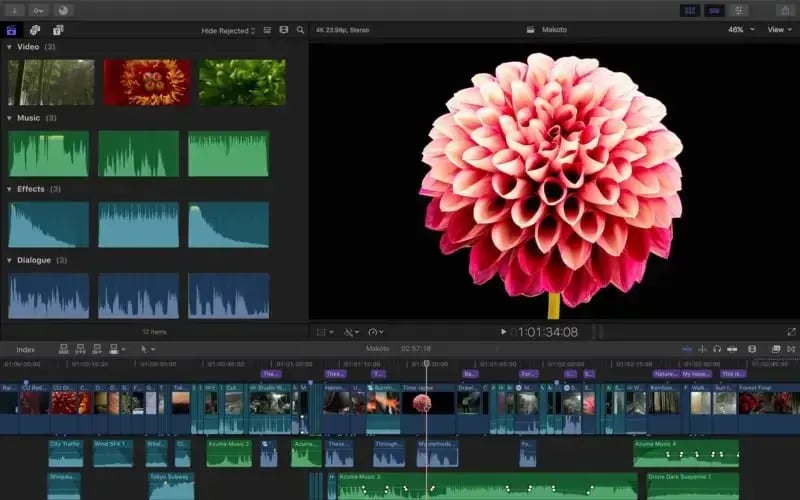
Final Cut Pro | Toolkit for editing videos
The education angle has moved with it. Apple Creator Studio is $2.99 a month or $29.99 a year for college students and educators, with status re-verified annually and Family Sharing excluded. The $199.99 Pro Apps Bundle for Education that older guides recommend is no longer sold as a standalone product. Final Cut Pro on the Mac now requires macOS 15.6 or later.
6. OpenShot
OpenShot is a free, open-source editor under the GNU GPL v3, and OpenShot 4.0, released on 30 August 2026, changed what it is good for. It now records the screen, webcam, and microphone itself, which is the feature a free editor needed to be usable for classroom capture.
The extensive feature set of OpenShot includes:
- Cross-platform support for Windows, Linux, macOS, and Chrome OS
- Multiple video, audio, and image formats support
- Unlimited tracks and layers for building watermarks, background audio tracks, background videos, etc.
- 400+ video pre-made transitions with real-time previews
- Feature-rich timeline with drag-n-drop, scrolling, panning, zooming, and snapping functions
- Time-mapping for acceleration, deceleration, and reversing teaching videos
- Built-in screen, webcam, and microphone recording, new in 4.0
- Colour grading with wheels, curves, LUTs and live video scopes
- Keyframe animation of position, rotation and scale directly on the timeline
- Interactive video masks and 40+ Blender-powered 2D and 3D title templates
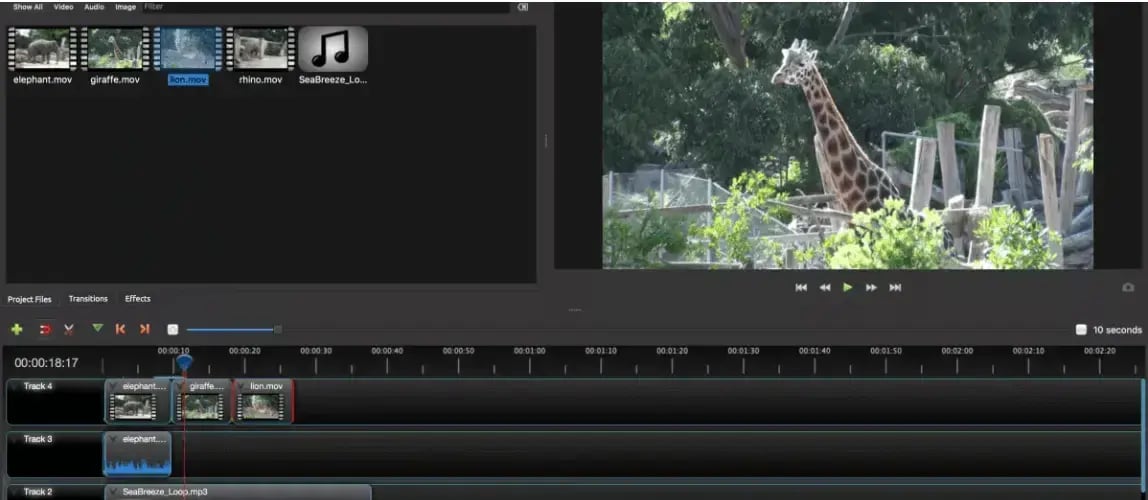
OpenShot | Popular video creation toolkit
There is no watermark, no subscription, and no export limit, and Chrome OS support means it runs on the hardware most schools actually buy. There is no education pricing, because there is no pricing at all.
7. Lightworks
Lightworks is LWKS Software's non-linear editor, with roughly three decades of professional use behind it. It is worth knowing two things before you standardise on it: the free tier is tighter than most guides admit, and LWKS publishes no prices.
Lightworks' core functionality includes:
- Advanced proxy workflows that support from HD up to 8K media quality
- Trim-slip, slide, ripple, roll, and multi-point functions
- Cross-platform nature supporting Windows, Mac, and Linux
- Diverse social media presets including YouTube, Vimeo, Facebook, Instagram, TikTok
- Wide codec selection that supports Apple ProRes, AVID DNxHD, AVC-Intra, Cineform, and H.264
- NewBlue visual effects tools on Windows and macOS
- GPU-accelerated playback and custom workspace layouts
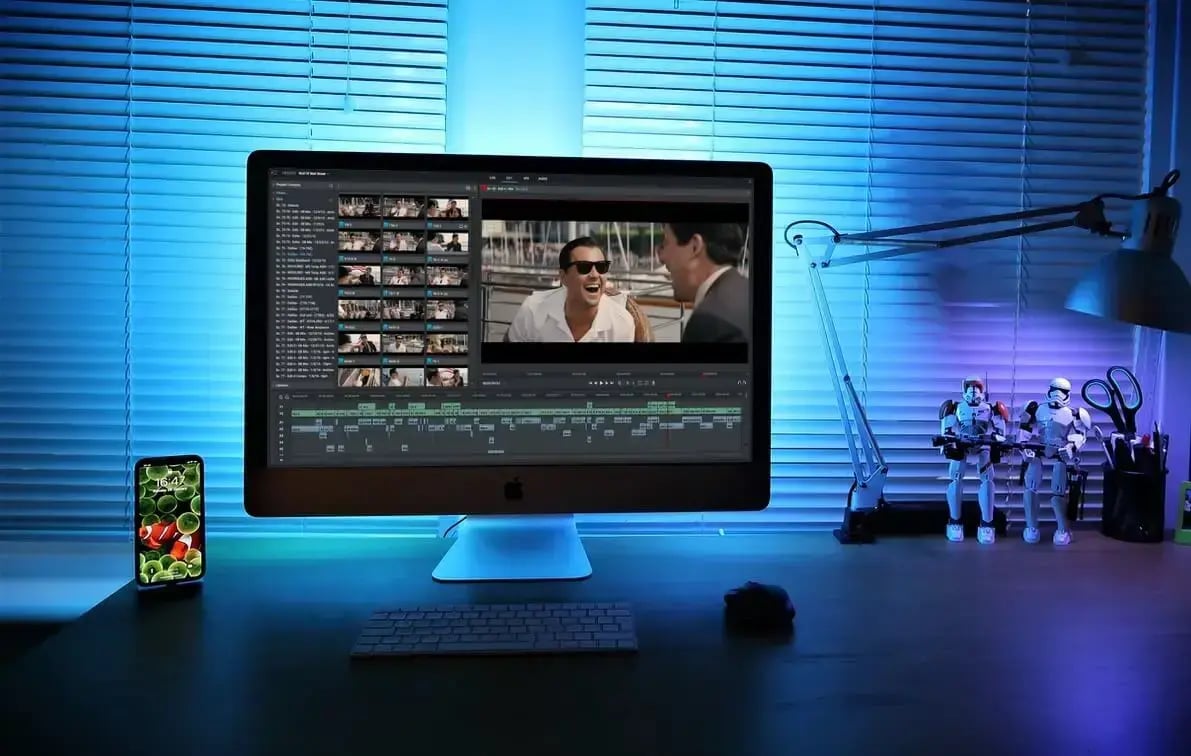 Lightworks Educational Video Editing Software
The free tier exports at 720p in MP4 only, with one cloud integration, and the licence expires every 90 days and has to be renewed by signing back into the application. There is no watermark. The Create and Pro tiers are sold monthly, yearly, or as a one-time purchase, but every figure on the LWKS pricing page is loaded after sign-in, so check the current price yourself before budgeting. Lightworks EDU gives students and staff the full Pro feature set at a 50% saving, with student licences capped at three years.
8. iMovie
iMovie is Apple's free consumer editor for Mac, iPhone and iPad, and it is still the gentlest way for a teacher on Apple hardware to make a first video. Include it with one caveat: Apple has quietly stepped back from it. The apple.com/imovie marketing page now redirects to a support page, the Mac app was last updated on 28 January 2025, and iMovie is absent from the Apple Creator Studio announcement that names every other Apple creative app.
The core features include:
- Timeline editing on Mac, iPhone and iPad at no cost
- Magic Movie and Storyboards on iOS and iPadOS for a guided first edit
- Themes, titles and transitions that need no configuration
- Handoff to Final Cut Pro when a project outgrows it
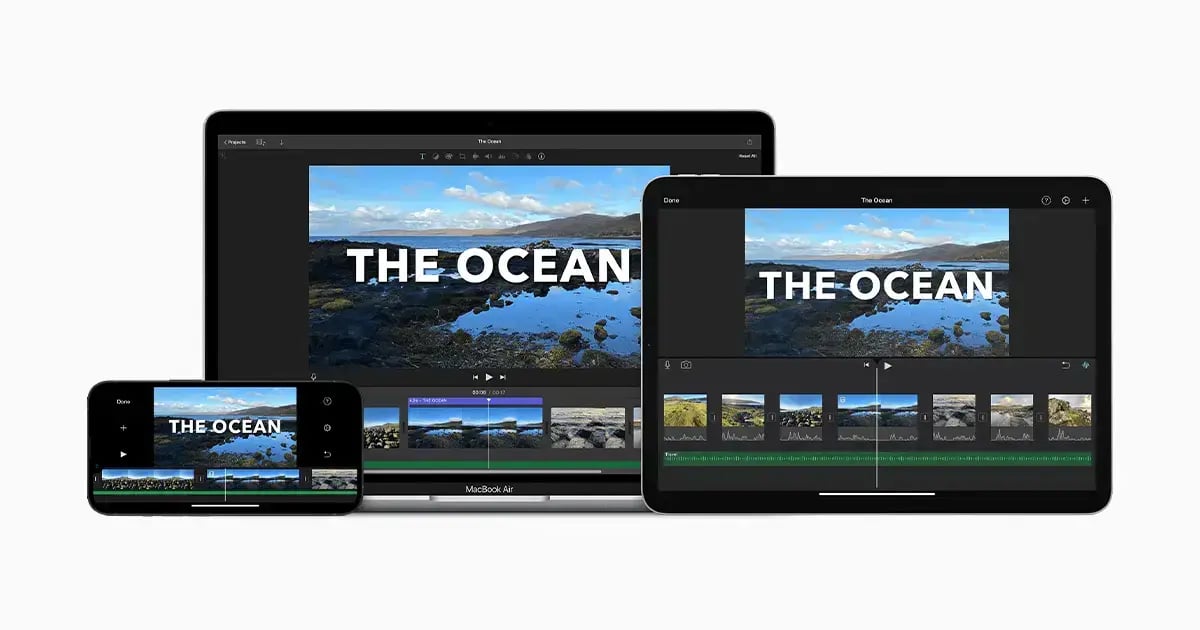
iMovie | Education video creation toolkit
There is no watermark and no export limit, and the Mac version requires macOS 15.6 or later. There is also no screen recording, which is the feature educational video needs most, so pair it with the macOS screenshot toolbar or pick a tool from higher up this list.
How a Video Editor SDK Cuts Development Time by Up to 50%
When it comes to building your own best video editing software for education, high project development costs are among the core constraints you can face. Apart from building essential features, providing users with advanced built-in content is a must-have to increase your chances of success. Editing filters, pre-made templates, customizable presets, and other content are becoming commonplace for most software solutions.
All these factors lead to building your in-house team or outsourcing to a third-party vendor taking months if not years of project development and hundreds of thousands of US dollars to succeed.
Using a premade video editing SDK like Banuba is among the core drivers to decrease your project budget. Software development kits include a set of ready-made modules with functionality, along with built-in advanced content like filters, presets, templates, and effects.
Banuba says its Video Editor API saves up to 50% of development time, and the shape of that saving is easier to judge against a side-by-side look at the mobile video editor SDKs on the market than against any single vendor claim. Banuba also lists education apps as a supported use case, describing the SDK as a tool for making microlearning videos with visual aids for learners of all ages.

For example, Weat, a food-centric video-native social commerce platform, decided to launch a TikTok-like application for food recipes, but high project costs became a trouble-making constraint for the project. This resulted in looking for existing SDKs and APIs that could help cut expenses and even accelerate the time-to-launch period. Among the core demands, Weat required a diverse feature set, and Banuba's video toolkit became a perfect product-market fit.
The most demanding features for Weat included:
- Video trimming
- Video recording (including hands-free mode)
- Audio editing
- Video captions
- Picture and GIF overlays
- AR face filters
- LUTs ("Instagram filters")
- Picture-in-picture.

Weat launched on iOS in November 2021, having saved 50% of its product development time with the Banuba Video Editor SDK, and the full Weat case study sets out which features covered which requirement. With little marketing it reached about 5,000 downloads, and the team went on to plan an Android version.
With Banuba Video Editor SDK we can cut our development effort in half so we can focus more on core business functionality.
- Ash Zarif, CTO, Weat
The same argument applies to the wider category: our rundown of AI video editing tools covers the desktop side, and the training video editing software guide covers the corporate L&D case, which is the closest neighbour to a course library.
Why Teams Build Education Video Apps on Banuba's Video Editor SDK
The video editing toolkit provides the next features:
- AI Clipping that builds one video out of the strongest parts of three others and matches the cut to the beat of the music, regenerating the result if the user does not like it.
- AI Captions built on AWS Transcribe, shipping with English, Mandarin, Spanish and Portuguese and extendable to more languages, which is the accessibility requirement most course libraries are held to.
- Templates with placeholder clips, effects, transitions and music, so a student or an instructor can produce something watchable without learning an editor.
- Picture-in-picture with several layouts and positions, for a talking head over a screen recording.
- Face AR masks with morphing effects, animated backgrounds, 2D and 3D stickers and trigger-based facial animations, through Face AR SDK integration.
- Background swap for privacy and for a consistent look across a course.
- Colour filters (LUT) with a preset catalogue and support for uploading custom filters.
- Transition and video effects, including effects such as "Rave", "Cathode Flash" and "Soul".
- An audio editor module for recording, mixing, and audio-visual timing.
- Text and GIF layers with scaling, rotation, timeline duration, and drag positioning.
- Cross-platform support for iOS, Android, Flutter and React Native.
The SDK requires iOS 15.0 with Swift 5.9 and Xcode 26 on Apple platforms, and Android 8.0 with the Camera 2 API, Kotlin 2.1 or Java 17, and OpenGL ES 3.0 on Android. Pricing is based on monthly active users rather than developer seats, so the cost tracks the size of the course audience instead of the size of the engineering team; add-ons such as integration assistance are quoted separately. Teams working with AI coding assistants can install Banuba's agent skills for Claude Code, Codex, and Qwen Code in one command.
References
Apple. (2026). Apple Creator Studio. Apple. https://www.apple.com/apple-creator-studio/
Apple. (2026). Final Cut Pro. Apple. https://www.apple.com/final-cut-pro/
Banuba. (n.d.). Video Editor SDK. Banuba. https://www.banuba.com/video-editor-sdk
Blackmagic Design. (n.d.). DaVinci Resolve Studio. Blackmagic Design. https://www.blackmagicdesign.com/products/davinciresolve/studio
Descript. (n.d.). Pricing. Descript. https://www.descript.com/pricing
LWKS. (n.d.). Education. Lightworks. https://lwks.com/education/
LWKS. (n.d.). Pricing. Lightworks. https://lwks.com/pricing
Microsoft. (n.d.). Clipchamp for education. Clipchamp. https://clipchamp.com/en/clipchamp-for-education/
OpenShot. (n.d.). Features. OpenShot. https://www.openshot.org/features/
TechSmith. (n.d.). Camtasia education pricing. TechSmith. https://www.techsmith.com/store/camtasia/education
TechSmith. (n.d.). Upcoming changes to quizzing in TechSmith apps. TechSmith Support. https://support.techsmith.com/hc/en-us/articles/14539861012237-Upcoming-Changes-to-Quizzing-in-TechSmith-Apps
-
The complete technical documentation for the Banuba Video Editor SDK is available online and includes requirements, setup instructions, and configuration details:
- Banuba Video Editor SDK iOS documentation
- Banuba Video Editor SDK Android documentation
- Banuba Video Editor SDK Flutter documentation
- Banuba Video Editor SDK React Native documentation
This Banuba Video Editor SDK documentation is regularly updated and should be your primary reference during integration.
-
You can access official integration code samples for the Banuba Video Editor SDK on GitHub. Banuba provides platform-specific examples to help you integrate faster:
- Banuba Video Editor SDK iOS integration code sample
- Banuba Video Editor SDK Android integration code sample
- Banuba Video Editor SDK Flutter integration code sample
- Banuba Video Editor SDK React Native integration code sample
These Banuba Video Editor SDK repositories include setup instructions and minimal working examples for quick deployment.
-
Yes. The Banuba Video Editor SDK includes an LLM-friendly documentation file designed for AI-assisted development and internal knowledge systems:
This structured Banuba Video Editor SDK text file can be used with AI tools to streamline onboarding and developer workflows.
-
The Banuba Video Editor SDK provides official cross-platform plugins to simplify integration into hybrid applications:
These Banuba Video Editor SDK plugins are maintained by Banuba and support faster implementation for cross-platform apps.
-
Yes, Banuba Video Editor SDK includes agent skills for Claude Code, Codex, and Qwen Code. You can install them with a single command. See the Banuba Agent Skills documentation page.
-
Banuba builds its SDKs mobile-first, so the video editing and AR features are optimised to run on both high-end and low-spec phones rather than requiring current-generation hardware. The Banuba Video Editor SDK adds a TikTok-style editor from 25 Mb, runs on iOS 15.0 and Android 8.0 with the Camera 2 API and OpenGL ES 3.0, and covers iOS, Android, Flutter, and React Native from one integration. The Banuba Video Editor SDK requirements list the exact platform minimums.
-
Record the lesson and the screen first, edit second, and caption before you publish. A practical sequence is: script the lesson in short segments, capture screen and camera together in Camtasia or Clipchamp, cut the filler out through the transcript, add captions, then export a SCORM package if the video is going into an LMS. Teams that deliver lessons inside their own app do the same work in the product itself: Banuba's video editing API covers recording, trimming, captions and effects so learners create and edit without leaving the app.
-
The AI features that actually save time on educational videos are transcription, filler-word removal, captions and voiceover. Descript's Underlord cuts a raw recording down from its transcript, Clipchamp generates subtitles and AI voiceovers at no cost on Microsoft 365 A3 and A5, and Camtasia adds AI voice generation and noise removal. Inside a learning app, Banuba's AI Captions generate subtitles on AWS Transcribe in English, Mandarin, Spanish, and Portuguese, and Banuba's AI Clipping assembles a short video from longer source clips.
-
Camtasia, Descript, Microsoft Clipchamp, DaVinci Resolve, Final Cut Pro, OpenShot, Lightworks, and iMovie are the tools most used for educational video. They differ mainly in capture and delivery rather than in editing: Camtasia and Clipchamp record the screen and the camera themselves; DaVinci Resolve and Final Cut Pro are production editors you feed footage into; and only Camtasia exports a scored package to an LMS. Banuba's Video Editor SDK covers the separate case of editing inside your own learning app.
-
Students and educators get the best value from Microsoft Clipchamp, DaVinci Resolve and Camtasia. Clipchamp for education is free with Microsoft 365 A3 and A5, DaVinci Resolve's free version is uncapped at 3840x2160, and Camtasia charges educators $162.36 a year and verified students $45 a year in the US, UK and Canada. Apple Creator Studio covers Final Cut Pro at $2.99 a month for students and educators, and Lightworks EDU is 50% off Pro. Banuba's video editor for social media apps is the option when the video is created by learners inside a platform you own.
-
Microsoft Clipchamp, iMovie, and OpenShot are the easiest starting points. Clipchamp runs in a browser with templates and auto-subtitles, iMovie's Magic Movie builds a first edit on an iPhone or iPad without any configuration, and OpenShot is free on Windows, macOS, Linux, and Chrome OS with drag-and-drop editing. For a beginner producing course video specifically, Clipchamp is the strongest of the three because it records the screen. Banuba applies the same idea inside apps: its Video Editor SDK ships templates with placeholder clips, effects and music, so a first-time editor working in a video editor built into a photo or video app only has to swap the placeholders.
-
Banuba Video Editor SDK pricing is custom and based on monthly active users, with no public price list and no per-developer seat fee. A 14-day free trial covers the full feature set on every platform. The Banuba Video Editor SDK pricing guide explains how the quote is built.